
Oil and vinegar separate because neither one will dissolve in the other. Shaking a jar breaks the oil into millions of tiny droplets scattered through the vinegar, but nothing is holding them apart, so within a few minutes they find each other and float back to the top. A dressing that stays mixed needs an emulsifier: something that clings to oil at one end and to water at the other, coats each droplet and stops it merging with its neighbours. Mustard does that job in a vinaigrette and egg yolk does it in mayonnaise. Work to roughly three parts oil to one part acid, add the oil slowly rather than all at once, and a dressing will hold for the length of a meal.
Oil and vinegar, and why they refuse to mix
Vinegar is mostly water with a few per cent acetic acid in it, and water molecules hold on to one another tightly. Oil molecules have no interest in joining in, and the water has no interest in making room for them, so nothing dissolves. Pour one into the other and you have two layers, oil on top because it is the lighter of the two. Shaking changes none of that chemistry. It only changes the geometry, tearing the oil into droplets and scattering them through the vinegar. Left alone, those droplets drift together, merge and rebuild the layer. In a kitchen that is called splitting or breaking, and it is the natural state of affairs rather than a mistake.
What an emulsion actually is
An emulsion is one liquid broken into droplets and held dispersed through another it will not dissolve in. Most kitchen emulsions are oil-in-water: vinaigrette, mayonnaise, milk, a pan sauce finished with butter. A few run the other way round, water in oil, and the tubs in the chiller are the everyday example, which is part of what butter, margarine or spread is about. The useful distinction is between temporary and stable. A shaken vinaigrette is temporary and holds for minutes. Mayonnaise is stable and keeps for weeks in the fridge. What separates the two is whether an emulsifier is present, and how finely the droplets have been divided.
The emulsifiers already in your kitchen
- Mustard. The seed coat carries a gummy material that does the work, so a teaspoon whisked into the vinegar first will hold a vinaigrette through a meal. It is the simplest fix there is.
- Egg yolk. Yolk contains lecithin, the classic mayonnaise emulsifier, and one yolk will carry a surprising quantity of oil if you add it slowly enough.
- Honey, or a little sugar. Not true emulsifiers, but both thicken the watery part and slow the droplets down, which buys time.
- Garlic or shallot crushed to a paste. The plant cell material does some of the holding, which is why a pounded dressing behaves better than a chopped one.
- Yoghurt, tahini, miso or soft cheese. Already emulsions or thick suspensions, so a dressing built on one starts out half-solved.
- Starch. A spoonful of cooked potato or a cornflour slurry is how egg-free and dairy-free dressings get their body.
Ratio, and why three to one is a starting point
Three parts oil to one part acid is the classic vinaigrette and a sensible place to begin, but it assumes a wine vinegar at around six or seven per cent acidity. Balsamic is sweeter and milder and will take a closer ratio; lemon juice is sharper and usually wants more oil; sherry vinegar sits somewhere between. Taste the acid on its own before deciding. Salt dissolves in the watery part rather than the oil, so it goes in with the vinegar at the start rather than being sprinkled over the finished dressing, where it sits in grains. Then taste it on a leaf rather than off a spoon, because a dressing always reads sharper neat.
Technique: the order matters more than the equipment
Put the acid, the salt and the mustard in the bowl or jar first and mix them properly. Then add the oil. A slow drizzle while whisking gives the finest droplets and the steadiest result, because each drop is broken up before the next arrives; tipping the oil in all at once gives a coarse mixture that splits almost immediately. A jar and a hard shake makes a perfectly good temporary emulsion if you are dressing a salad now and eating it in ten minutes. A stick blender makes the finest droplets of all, which is how a reliable mayonnaise gets made in a minute. Fridge-cold oil is harder to disperse than oil at room temperature, so take it out early.
When mayonnaise splits, and how to bring it back
Almost every split mayonnaise comes from adding the oil too quickly at the start, before there is enough emulsion to carry it, or from the yolk and the oil sitting at very different temperatures. The repair is easy and worth knowing. Start again in a clean bowl with a fresh yolk, or with a teaspoon of water and a little mustard if you would rather not use another egg, then whisk the split mixture into that a few drops at a time, exactly as if it were the oil. It comes back. A split warm sauce usually responds to the same trick with a spoonful of warm water. Throwing it away is the only real mistake.
Bottled dressings, and what the label tells you
The ingredients list runs in descending order by weight, so on a lighter dressing water often comes first and the oil further down than you would guess. Emulsifiers, stabilisers and thickeners are given by function and then by name or number, and seeing several is ordinary in something built to survive months on a shelf rather than twenty minutes in a bowl. The oil should be named individually, and which cooking oil to use for what covers which is which. Nutrition information is declared per 100 grams, far more than anyone puts on a salad, and the allergen wording repays a read — particularly the voluntary phrasing that what “may contain” actually means unpicks.
What claim wording on a pack has to follow
Anything a food or supplement pack says about what a nutrient does is fixed by law in Great Britain: only wording authorised on the nutrition and health claims register may be used, the claim belongs to the nutrient rather than to the brand, and the product has to contain enough of that nutrient to qualify. Biotin has seven authorised claims, and these are the two people usually arrive looking for, in their exact permitted form:
- Biotin contributes to the maintenance of normal hair
- Biotin contributes to the maintenance of normal skin
The word “normal” carries both of them and cannot be dropped or traded up: maintenance of normal hair is authorised, thicker or faster-growing hair is not. There is no authorised nails claim in Great Britain, so we make none. We quote no claim wording for any other nutrient mentioned on this page either, including anything in an oil, an egg or a bottled dressing, because we only quote wording we have checked against the Great Britain register ourselves. What biotin actually does, and what it isn’t allowed to claim sets out the full position, and the rest of our plain-English explainers sit on the thinning hair topic page.
When it is worth asking a pharmacist or GP
- If you have dietary advice of your own and are unsure how a general rule of thumb fits it
- If there is an egg allergy in the house and you are working out which dressings and sauces are relevant
- If you are pregnant or breastfeeding and unsure about raw egg in a home-made mayonnaise
- Before starting anything new if you are taking prescription medicines or under medical care
Where the Biotin Gummies sit
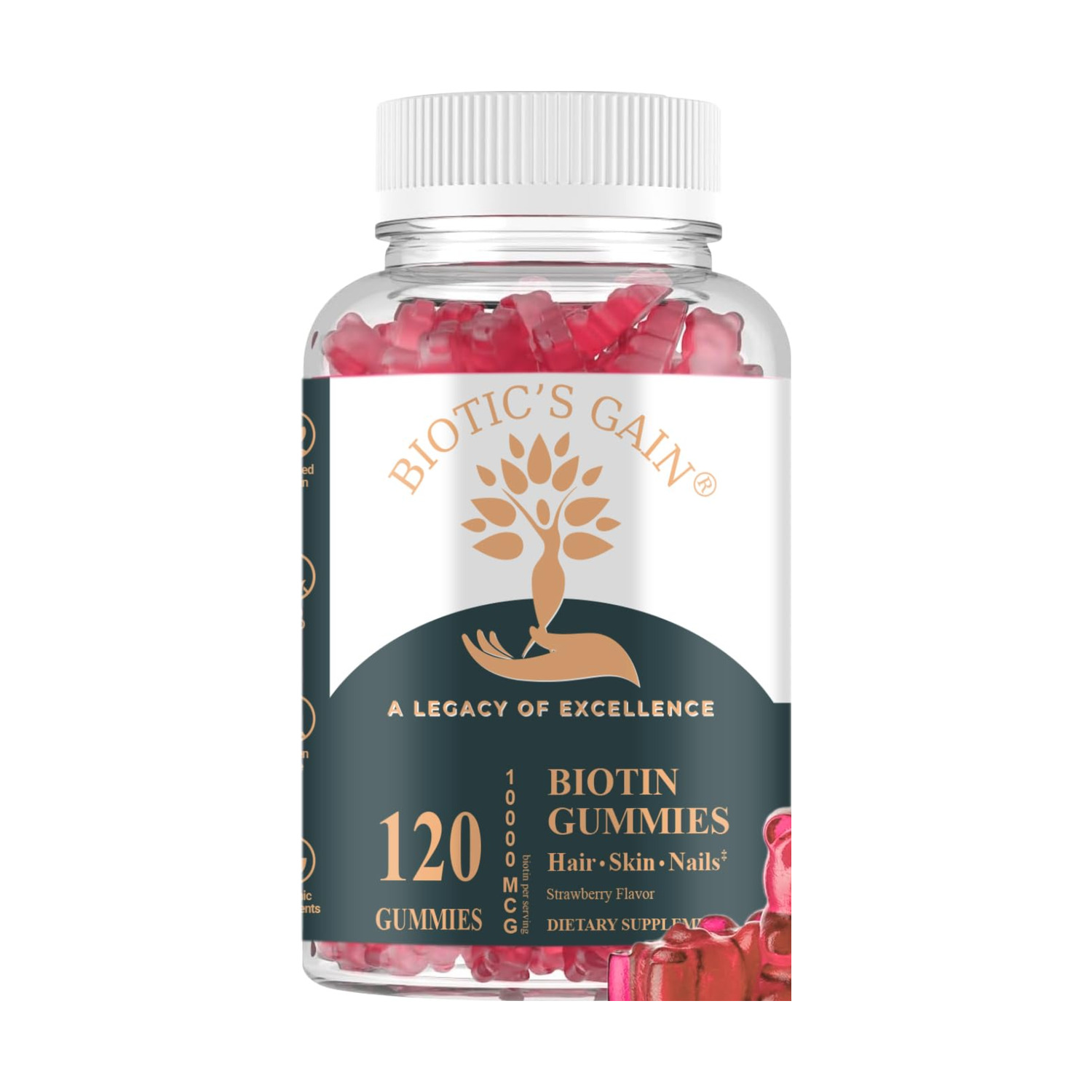
Biotic’s Gain Biotin Gummies are a food supplement rather than a kitchen ingredient, and nothing about them changes whether a dressing holds together or splits in the bowl. The amount of biotin in a daily portion describes what is in the product, which is a description and not a promise, and the ingredients printed on the jar are the authority on what else is in there rather than the front of the label or any product page. A supplement also sits alongside a varied and balanced diet rather than in place of one.
One practical note worth repeating wherever biotin comes up: high biotin intakes are known to interfere with some laboratory assays, so tell whoever runs the test what you take if you are having blood taken.
Related reading
Biotic’s Gain supplements are food supplements. They are not a substitute for a varied and balanced diet or a healthy lifestyle, and no food supplement can treat, prevent or cure any condition. Do not exceed the recommended daily portion. If you are pregnant, breastfeeding, taking medication or under medical care, speak to a pharmacist or GP first.

Leave a Reply