
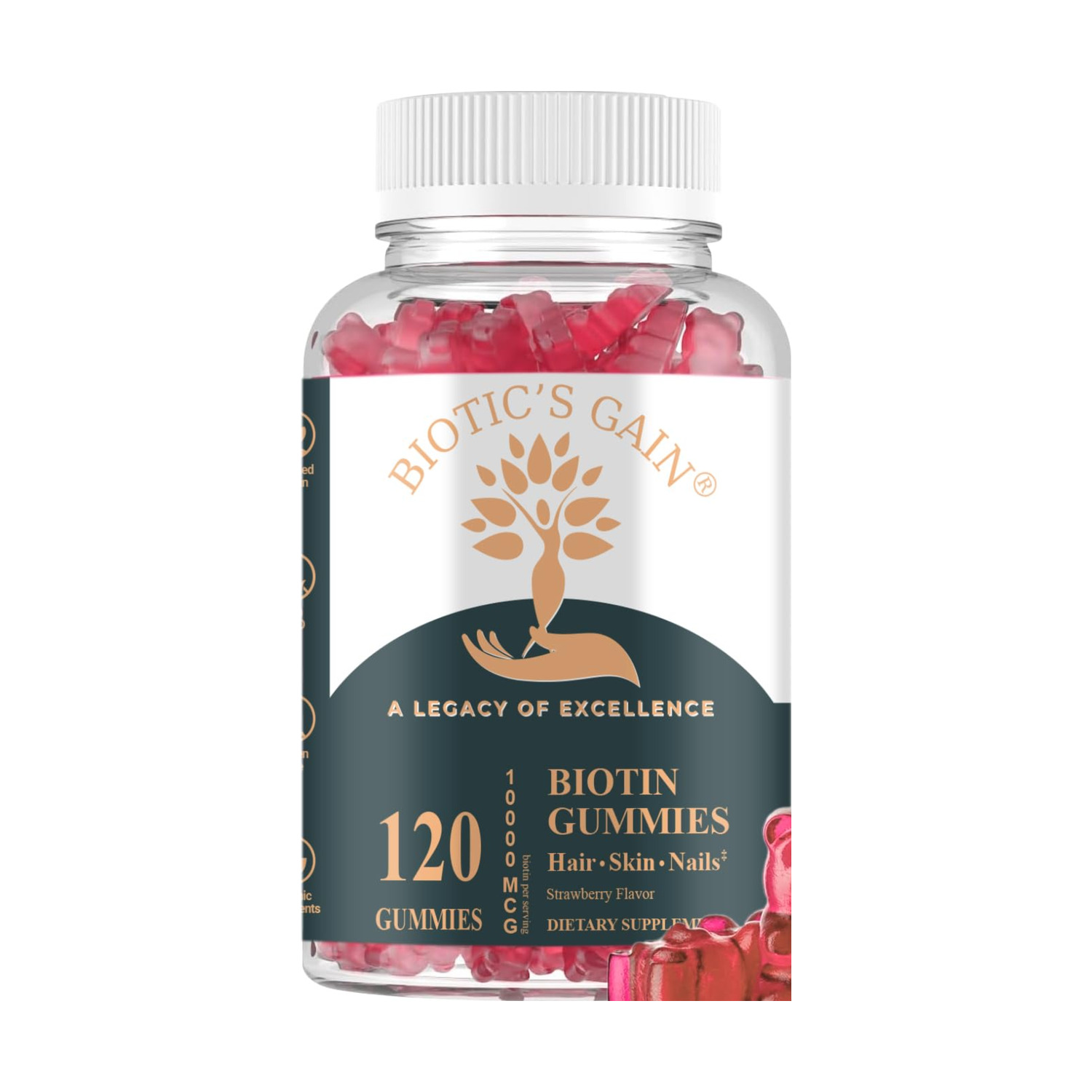
Biotin is a B vitamin, sometimes called vitamin B7. In Great Britain, only a fixed list of health claims may legally be made about it, and that list is shorter than most packaging suggests. Biotin contributes to the maintenance of normal hair and to the maintenance of normal skin. It also contributes to normal energy-yielding metabolism, normal macronutrient metabolism, normal functioning of the nervous system, normal psychological function and the maintenance of normal mucous membranes. Nails are not on the list. Anything promising thicker, faster or stronger hair is going beyond what the evidence supports.
What biotin is
Biotin is one of the eight B vitamins. It is water-soluble, which means the body does not store it in any quantity and what is not used is passed out rather than accumulated. It is found in eggs, liver, nuts, seeds, salmon and sweet potatoes, and it is also produced in small amounts by bacteria in the gut.
Because it is present in a reasonably wide range of everyday foods, genuine biotin deficiency is uncommon in people eating a varied diet. That is worth saying plainly, because a lot of marketing implies the opposite.
The claims that are actually authorised
Great Britain keeps a register of authorised nutrition and health claims. If a claim is not on it, it cannot be used on a product sold here, however plausible it sounds. For biotin, seven claims are authorised, and this is their exact permitted wording:
- Biotin contributes to the maintenance of normal hair
- Biotin contributes to the maintenance of normal skin
- Biotin contributes to the maintenance of normal mucous membranes
- Biotin contributes to normal energy-yielding metabolism
- Biotin contributes to normal macronutrient metabolism
- Biotin contributes to the normal functioning of the nervous system
- Biotin contributes to normal psychological function
Two words in there do a lot of work. The first is maintenance. The claim is about keeping something that is already normal in its normal state, not about changing it. The second is normal. It cannot be dropped, and it cannot be swapped for “improved”, “stronger” or “healthier”. A product may say biotin contributes to the maintenance of normal hair. It may not say biotin improves your hair.
There is also a condition attached: these claims may only be used on a food that is at least a source of biotin. A product with a token sprinkling cannot make them.
The claim that is missing
Nails. Biotin is sold almost universally as a “hair, skin and nails” supplement, and the nails part is not an authorised claim in Great Britain. In fact the phrasing “necessary for healthy teeth, bones, hair, skin and nails” was specifically assessed and not authorised.
We mention this because it is the quickest way to judge a biotin brand. If the label or the listing promises nails, the company either has not checked the register or has decided to ignore it. Neither is reassuring.
Why the dose is so large
Biotin supplements are commonly sold at 10,000mcg, which is ten milligrams. Set against the small amounts found in food, that number looks startling, and it is fair to ask why.
Biotin is water-soluble and not stored, so there is no accumulation in the way there is with fat-soluble vitamins, and high-strength doses are the market norm rather than an outlier. The honest answer, though, is that a larger number is also easier to sell. More is not automatically better, and once the authorised claims are met, a higher figure does not unlock a stronger claim — the permitted wording is the same either way.
One practical point that is genuinely worth knowing: high-dose biotin can interfere with certain laboratory blood tests, including some thyroid and cardiac tests, producing misleading results. If you have blood tests booked, tell whoever is taking them that you take a biotin supplement.
How long before anything is noticeable
Hair grows roughly a centimetre a month, and each strand sits in a growth phase lasting years before it sheds. Nothing you take changes hair that has already grown — only what emerges from here on. That means any supplement aimed at hair works on a timescale of months, not weeks, and anyone promising a visible difference in a fortnight is selling you something other than biotin.
It also means consistency matters more than dose. A gummy taken daily for six months does more than a stronger one taken sporadically.
How to read a biotin label
- The amount per serving, and what a serving is. Two gummies at 5,000mcg each is a 10,000mcg serving, not a 5,000mcg product. Check which number is on the front.
- Sugar content, if it is a gummy. Gummies need something to hold them together. It is a reasonable trade for most people, but it should be visible on the label.
- What else is in it. Some products combine biotin with other vitamins, which may bring their own authorised claims. Others do not.
- The claims themselves. Now that you know the permitted wording, a label that strays from it tells you something about the company.
Our biotin gummies
Biotic’s Gain High Strength Biotin Gummies supply 10,000mcg of biotin in a bear-shaped gummy taken daily. We describe them using the authorised wording and nothing beyond it: biotin contributes to the maintenance of normal hair and to the maintenance of normal skin. We do not make a nails claim, because there isn’t one to make.
Related reading
Thinning hair: what to look at first
Biotin gummies UK: what biotin does for hair and skin
Collagen peptides: what they are and how to use them
Food supplements are not a substitute for a varied and balanced diet and a healthy lifestyle. If you are pregnant, breastfeeding, taking medication or have a medical condition, speak to a pharmacist or your GP before starting a new supplement.
Leave a Reply