

Yes, if you can manage it. Brushing is the only home routine that physically removes plaque from the tooth surface, and it has a short window to work in: soft plaque hardens into tartar within a couple of days, and once it has, it no longer comes off with a brush and needs a vet to remove it. Daily is what most vets aim for, and a few times a week still counts for a great deal more than nothing at all. The hard part is almost never the brushing itself. It is a dog who has never had their mouth handled, and the answer to that is two weeks of very short, very boring sessions. Use dog toothpaste only.
What brushing is actually doing
A film of bacteria and saliva settles on teeth within hours of eating. While it is soft it can be wiped or brushed away, but minerals from saliva steadily harden it, and after roughly two or three days it has set into tartar: rough, firmly attached and no longer shiftable with a brush at home. Tartar then gives new plaque a better surface to stick to, which is why the problem builds rather than holding steady.
The gum line is where it matters. Most of the trouble in a dog’s mouth happens in the narrow margin where tooth meets gum, and that margin is exactly what a brush can reach and a chew generally cannot. It is also why brushing frequency matters more than brushing thoroughness: thirty seconds along the outside of the gum line every evening beats a determined five-minute scrub once a fortnight.
The inner surfaces of the teeth, facing the tongue, collect far less and can reasonably be skipped. The big chewing teeth at the back and the long canines at the front are the ones worth getting to.
Starting with a dog who hates it
Almost every failed attempt at brushing is a dog who went from never having their muzzle touched to having a brush in their mouth in one evening. Build it in stages instead, a few days at each step, and stop each session while your dog is still happy rather than when they have had enough.
- Days one to three. Touch the side of the muzzle, let go, give a treat. Five repetitions, then stop. That is the whole session.
- Days four to six. Lift the lip briefly to show the teeth, let go, treat. Still five repetitions.
- Days seven to nine. A dab of dog toothpaste on your finger, offered to lick. Most are flavoured for exactly this reason.
- Days ten to twelve. Finger with paste along the outside of a few teeth, two or three seconds, then finish.
- Day thirteen onwards. Swap your finger for a brush and add a few teeth each night until you are doing the whole outside line.
Approach from the side rather than head-on, sit beside your dog instead of looming over them, and keep hold of the lip rather than the jaw so nothing feels like being restrained. If a session goes wrong, go back two steps rather than pressing on. Puppies take to it in days, which is the argument for starting long before there is anything to remove.
What to use, and what to keep away
A soft-bristled brush is all that is needed: either a dog toothbrush with a long handle, a child’s brush, or a rubber finger brush, which many owners find easier to control on a small dog. Toothpaste has to be a dog one. Human toothpaste is not made to be swallowed, fluoride is not intended to go down in quantity, and some human pastes and mouthwashes contain xylitol, which is seriously toxic to dogs even in small amounts. Dog pastes are enzyme or flavour based and are designed to be eaten.
Skip bicarbonate of soda, salt and anything improvised. Skip hard bones, antlers and hooves too: they do scrape at plaque, but they fracture teeth doing it, which is covered properly in how to choose a safe chew.
What chews, additives and dry food can and cannot do
Dental chews, water additives and dental diets are sold as additions to a routine, not replacements for one, and that is the honest way to read them. A chew acts on the surfaces it happens to rub against during the minute or two it lasts, which is not the gum line and not the back of the mouth. Water additives reach everything but scrub nothing. The old belief that dry food cleans teeth does not hold up well either: most kibble shatters rather than scraping, and texture is only one of the things that decides what a dog will eat, as wet food versus dry food sets out.
None of that makes them pointless. A dog who will not tolerate a brush at all is better served by something than by nothing, and chewing is a normal need in its own right regardless of teeth, which is why dogs chew everything in the first place. Just do not let a packet of dental sticks become the reason the brush never comes out.
The weekly look in the mouth
- Breath. Dog breath is never floral, but a sharp or rotten smell is a change worth acting on rather than living with.
- The gum line. A thin red stripe where gum meets tooth, or gums that bleed when brushed, is the earliest thing you will notice.
- Brown or grey build-up. Usually worst on the big teeth at the back and along the upper jaw.
- Broken or discoloured teeth. A single grey or pink tooth is not cosmetic and needs looking at.
- Eating habits. Dropping food, chewing on one side, turning away from hard food or suddenly preferring wet.
- Face rubbing and drooling. Pawing at the mouth, rubbing along the sofa, or saliva with a trace of blood in it.
When to speak to your vet
- Visible tartar, receding gums, or gums that bleed easily — brushing cannot remove what has already hardened
- Bad breath that has changed or worsened, rather than ordinary dog breath
- A broken, loose, grey or pink tooth, at any age
- Dropping food, reluctance to chew, or any change in how your dog eats
- Swelling on the face or under an eye, which can come from a tooth root
- Before starting a dental routine in an older dog, or one who has never had their mouth examined, so anything painful is found first
A vet can tell you in a minute whether you are starting from a clean mouth or one that needs a scale and polish under anaesthetic first, and brushing a sore mouth will teach a dog to hate the whole business. Older dogs are the ones most likely to have something underneath, and our guides on that stage of life sit on the older dogs topic page.
Where the 25-in-1 Multivitamin sits
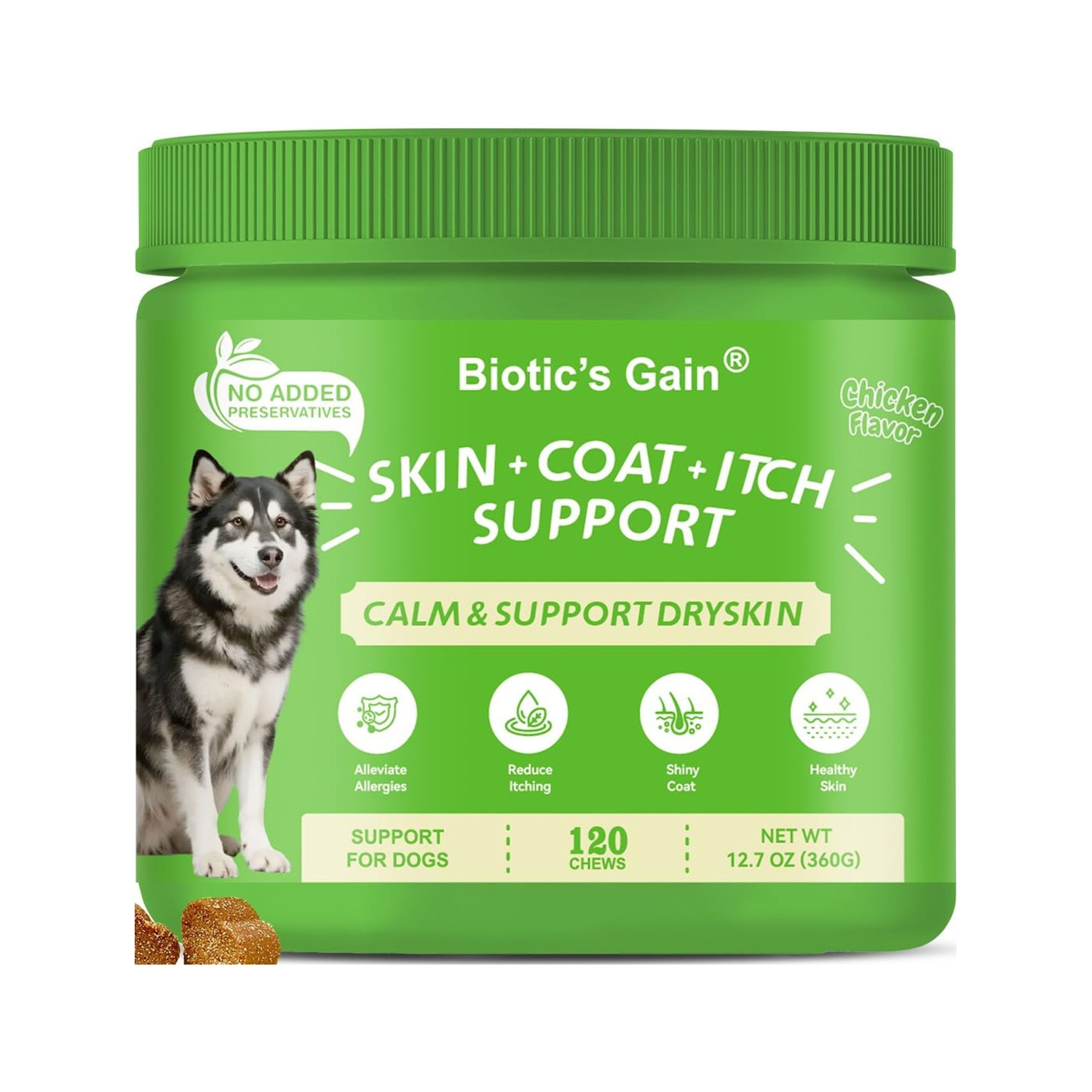
Biotic’s Gain 25-in-1 Multivitamin Soft Chews are a complementary feed, 120 soft chews per pack, fed to the guide printed on the pack by your dog’s weight and alongside a complete, balanced diet. A complementary feed is food rather than medicine, and cannot treat, prevent or cure anything, including anything described on this page. It is worth being blunt on a page about teeth: it is a soft chew, it is swallowed in seconds, it is not a dental product and it does nothing for plaque.
What changes a dog’s mouth is the routine: a brush most days, a weekly look, and a vet’s eyes on anything that has already hardened. Handling is the skill the whole thing rests on, and it transfers — a dog who tolerates a toothbrush is usually easier to bath, towel and check over, which how often to bath a dog goes into. Speak to your vet before adding anything new to your dog’s routine, particularly if your dog is unwell, pregnant, or receiving medication.
Related reading
Biotic’s Gain chews are a complementary feed for dogs, not a medicine. A complementary feed cannot treat, prevent or cure any condition and should be fed alongside a complete, balanced diet. Follow the feeding guide on the pack, and speak to your vet before adding anything new to your dog’s routine, particularly if your dog is unwell, pregnant, or receiving medication.
Leave a Reply