
For most healthy dogs with no skin problems, a bath every four to eight weeks is a sensible rhythm, and plenty of short-coated dogs comfortably need less than that. Washing more often than the coat actually requires strips the natural oils that keep skin comfortable and the coat sitting properly, which is why over-bathing so often produces exactly the dryness and flaking people are trying to wash away. Coat type, lifestyle and what your dog rolls in all shift the number — a working spaniel in winter mud is not on the same schedule as an indoor whippet. And if your vet has recommended a particular shampoo or frequency, that instruction beats any general rule on the internet, including this one.
What a bath actually does
A dog’s skin produces sebum, an oily secretion that coats the hair and forms part of the skin’s barrier. It is what makes a healthy coat feel slightly slick rather than dry and papery, and it is also why a dog who has not been bathed in a while develops that particular doggy smell — sebum plus the ordinary bacteria and yeast that live on any animal’s skin.
Shampoo works by lifting that oil away along with the dirt. That is the point of it, and it is also the reason frequency matters: strip the oils faster than the skin replaces them and you end up with a coat that looks dull and skin that feels tight and flaky. The body responds by producing more oil, which is how some over-washed dogs end up greasier than they started. Leave the coat alone too long, on the other hand, and you get matting, trapped debris and a smell nobody enjoys. The right frequency sits between those two, and it is different for every dog.
A rough guide by coat type
Short, smooth coats — Staffies, Beagles, Boxers, Whippets — tend to need the least. Every couple of months is often plenty, with a damp cloth or a rinse handling the muddy days in between. Double-coated breeds such as Labradors, Huskies and German Shepherds usually sit around the six to eight week mark, though a bath during a heavy moult earns its keep because it loosens a great deal of dead undercoat at once.
Long-coated dogs — Shih Tzus, Cavaliers, Setters — are generally on a three to four week cycle, mostly because the coat traps more and mats more readily. Curly and continuously growing coats, so Poodles and the doodle crosses, are typically bathed at each grooming appointment, roughly every four to six weeks, and the drying and brushing afterwards matter more than the wash itself. Wire coats need relatively little bathing; too much softens the texture the coat is supposed to have.
Lifestyle then adjusts all of that. A dog who swims in rivers, works in fields or sleeps on the bed will be washed more often than one who walks on pavements. None of this is precise, and it is not meant to be.
Signs you are washing too often
Dry, flaky skin showing through the coat is the usual first sign, often mistaken for something that needs another bath. A coat that has lost its shine, or feels coarse and straw-like rather than smooth, points the same way. Some dogs start scratching more in the days after a wash. If any of that appears and the schedule has crept up, stretching the interval is the first thing to try before anything else.
Persistent itching that does not settle when the schedule relaxes is a different matter and belongs with your vet rather than with a change of shampoo. We covered the usual causes in why a dog itches when there are no fleas.
Never use human shampoo
This one is worth stating plainly because it is such a common shortcut. Human skin and dog skin sit at different pH levels, and human shampoos — including baby ones — are formulated for ours. Used on a dog they tend to strip more than intended and leave the skin unhappy. A plain dog shampoo from any pet shop is inexpensive and does the job properly.
Skip heavily fragranced products where you can. The scent is for the owner, not the dog, whose sense of smell is the sharpest thing about them.
Doing it properly
Brush the coat out thoroughly before the dog gets anywhere near water. Mats tighten dramatically when wet and become far harder to remove, so this step saves a great deal of grief. Use lukewarm water, never hot, and wet the coat right down to the skin rather than just the surface, which on a double coat takes longer than people expect.
Work the shampoo in, keeping it away from eyes and ears, then rinse for longer than feels necessary. Residue left in the coat is one of the more common causes of post-bath itching. Dry properly afterwards — towels first, then a low, cool setting on a dryer if your dog tolerates it. A thick undercoat left damp underneath is how skin problems start. Finish with a brush once everything is dry.
Between baths
Most of what keeps a coat in decent condition is not bathing at all. Regular brushing spreads the natural oils along the hair shaft and lifts out loose hair and debris, which does more for how a coat looks than any shampoo. Muddy paws and legs rinse off with plain water. A damp microfibre cloth handles a mild roll in something unpleasant.
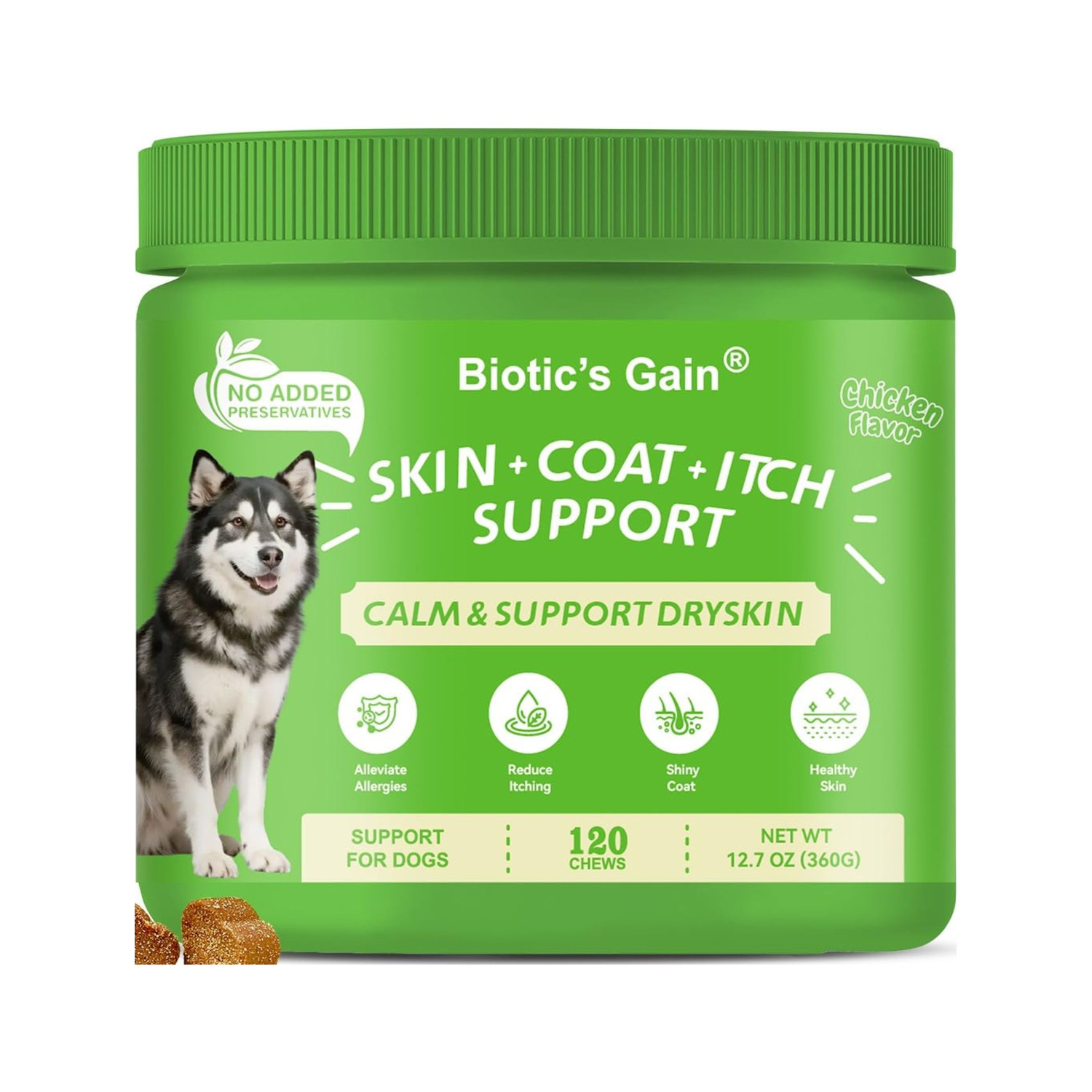
Diet sits underneath all of it, since a complete and balanced food is formulated to supply the nutrients involved in skin and hair. Biotic’s Gain Omega 3 for Dogs Skin & Coat Soft Chews are a complementary feed containing omega-3 fatty acids with biotin and zinc, fed alongside a complete diet rather than instead of one, following the feeding guide on the pack for your dog’s weight. They are food, not medicine, and they are not a treatment for a skin condition.
When to ask your vet first
Speak to your vet before settling on a routine if your dog has broken or inflamed skin, hot spots, bald patches, a strong or unusual smell, or recurring ear trouble. Medicated shampoos exist for particular situations and are used on a schedule your vet sets, which may be far more frequent than anything above — that is a prescription, not a grooming choice. Puppies, very old dogs and any dog recovering from surgery also warrant a quick conversation rather than a guess.
Related reading
Biotic’s Gain dog chews are a complementary feed, not a medicine. They are not intended to diagnose, treat, cure or prevent any condition, and they are fed alongside a complete and balanced diet following the feeding guide on the pack. If your dog has sore, broken or inflamed skin, is on medication, is pregnant or is already under veterinary care, speak to your vet before adding any supplement or changing a washing routine.

Leave a Reply