
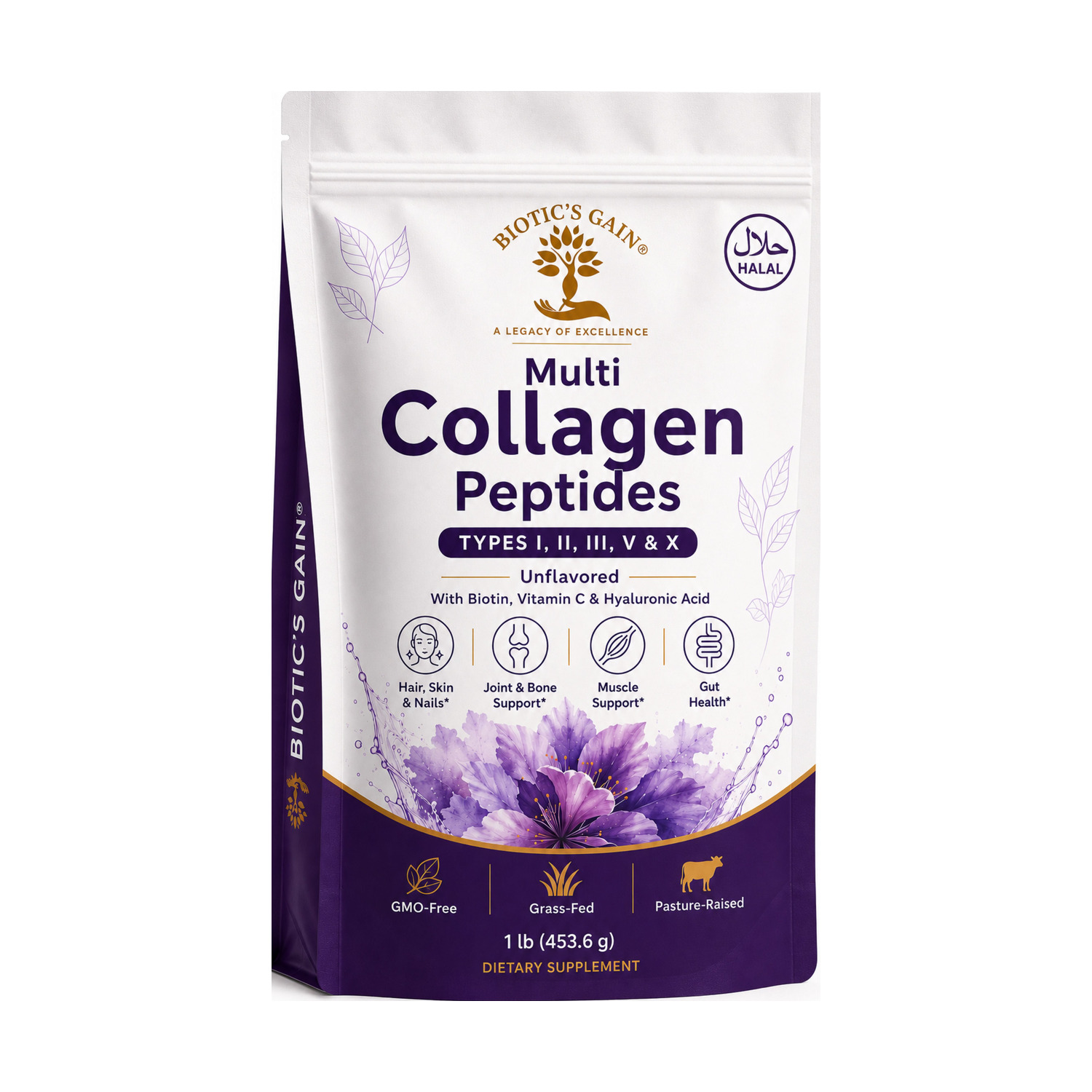
Walk down any supplement aisle and you’ll find collagen and biotin sitting next to each other, usually with hair on the front of the box. They get treated as interchangeable. They aren’t the same thing at all, and the difference is mostly a matter of what each one is and what Great Britain actually allows anyone to say about it.
What biotin is
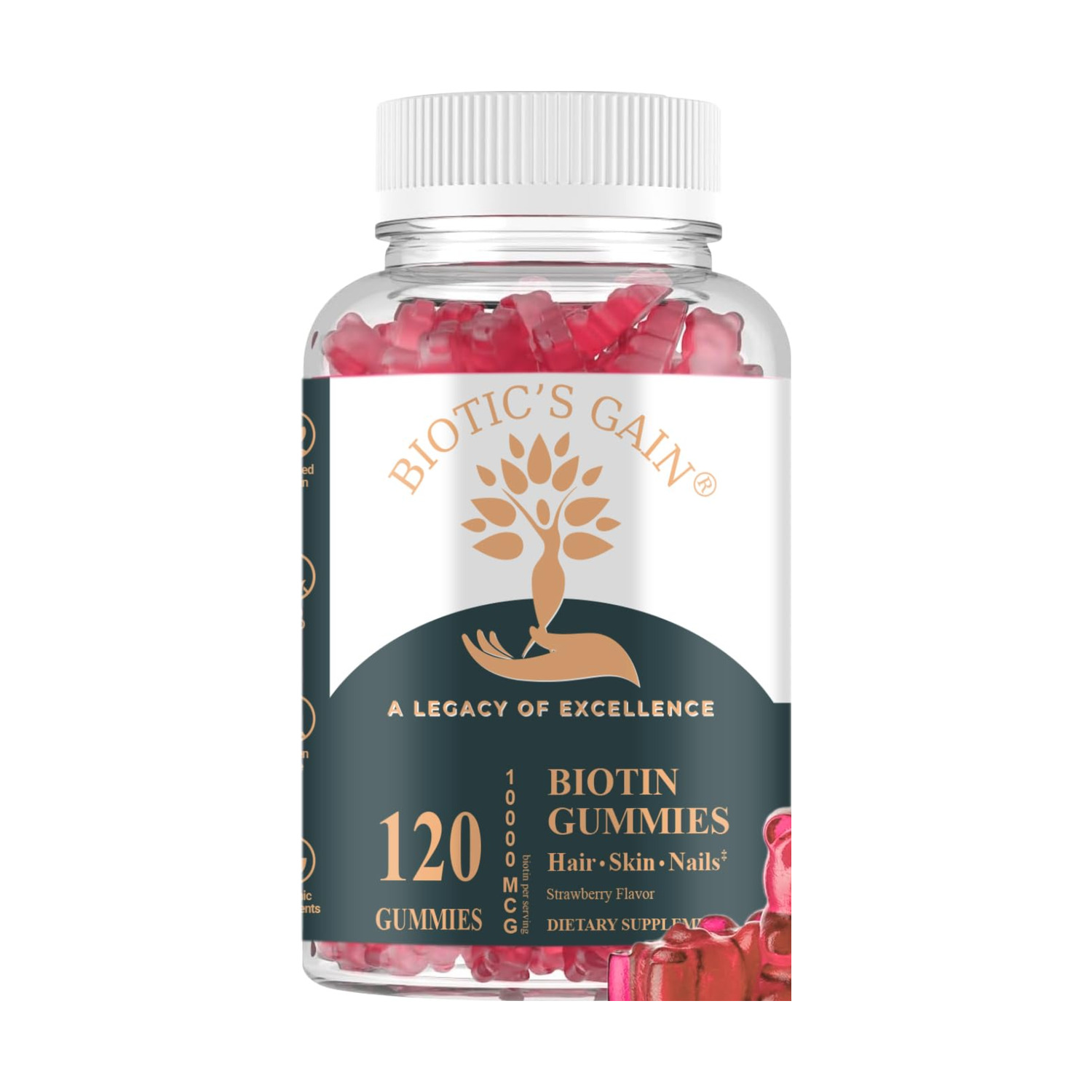
Biotin is vitamin B7, a water-soluble B vitamin. It occurs in egg yolk, liver, nuts and seeds, and in supplements it is usually D-biotin produced by chemical synthesis. Unusually for the ingredients on this shelf, it has authorised claims on the Great Britain register, so we can quote them exactly rather than paraphrase: biotin contributes to the maintenance of normal hair, to the maintenance of normal skin and to the maintenance of normal mucous membranes. It also contributes to normal energy-yielding metabolism, normal macronutrient metabolism, normal functioning of the nervous system and normal psychological function.
Two things worth noting about that list. The word “normal” is in every one of those claims and it is not decoration: the authorised wording is about maintenance of what is normal, not about improving on it, and it cannot be dropped. And there is no authorised nails claim for biotin, which is why you will not see one from us however often the category uses it. Being water-soluble, biotin isn’t stored by the body, so these products are sold as a daily habit rather than an occasional large dose.
What collagen is
Collagen is a protein, and the most abundant one in the human body. It is not a component of the hair shaft, which is made of keratin. Collagen peptides are collagen that has been hydrolysed into shorter chains of amino acids, sourced from bovine hide, from fish skin and scales, or from chicken cartilage depending on the type.
Here is the part the category tends to skate over: there is no authorised health claim for collagen in Great Britain, so we describe what is in the tub rather than what it does. The only adjacent authorised wording belongs to vitamin C, and it reads exactly like this: vitamin C contributes to normal collagen formation for the normal function of blood vessels, bones, cartilage, gums, skin and teeth. That claim requires vitamin C to actually be in the product. Collagen on its own carries none.
So which one?
Biotin is the one with authorised wording behind it, and it is inexpensive. If you want to buy on the basis of a claim you can look up on a public register rather than one a brand wrote itself, that is the one.
Collagen has no authorised claim of its own. That is a statement about the register rather than a verdict on the ingredient, but it does mean that anyone selling you collagen for a specific outcome has gone past what is permitted. Buy collagen because you want collagen peptides in the tub, and read the label for the type, the source and the amount per serving.
They aren’t alternatives to each other and there is no interaction problem in taking both. They are simply different substances: one a vitamin with authorised wording on the register, the other a protein with none.
What neither will do
This is the part most marketing skips. Food supplements are not medicines and are not a treatment for anything. They are not an answer to hormonal hair loss, thyroid conditions, iron deficiency or genetic pattern hair loss, and no amount of either one changes that.
If you’re experiencing sudden shedding, patchy loss, or a noticeable change over a short period, that’s a conversation with a GP rather than a supplement purchase. Blood work is more useful than guesswork.
Timelines
Hair grows roughly a centimetre a month, and only the newly formed section is grown during the period you have been taking anything at all. That is worth knowing simply as a matter of biology, and it is why both of these are sold as a months-long daily habit rather than a course of treatment. Anything promising you a visible outcome in a fortnight is selling you something other than biology.
Biotic’s Gain products are food supplements and are not a substitute for a varied, balanced diet or a healthy lifestyle. Nothing here is medical advice. If you have a health condition, are pregnant or breastfeeding, or are taking medication, speak to a pharmacist or your GP before starting a supplement.
Leave a Reply