
If you find more hair in the brush from about September onwards, you are in good company. Seasonal changes in hair shedding are widely reported, and autumn is the point in the year when most people notice it. It is rarely as dramatic as it feels, and for most people it settles again without anything being done about it.
The hair cycle, briefly
Every hair on your head is running its own independent cycle: a long growing phase lasting years, a short transitional phase, and a resting phase of a few months at the end of which the hair is released and a new one begins underneath. At any moment the large majority of your hair is growing and a smaller fraction is resting. Shedding is simply the resting hairs reaching the end of their turn.
Because each follicle runs to its own clock, the process is normally invisible. Losing somewhere in the region of fifty to a hundred hairs a day is ordinary and goes unnoticed. What people register is not the shedding itself but a change in the rate.
Why autumn in particular
The usual explanation is that a larger than normal proportion of follicles enter the resting phase during the summer, and since that phase runs for a couple of months, the shed arrives together in early autumn. Day length is thought to be the cue. Whatever the mechanism, the pattern is familiar enough that hairdressers tend to expect it.
It is also worth remembering that a summer of sun, salt water, chlorine and heat styling leaves hair in poorer condition. Breakage along the length is not the same thing as shedding from the root, but it looks similar in the basin and contributes to the feeling that things are thinning.
What to do in the meantime
Mostly, time. An autumn shed generally resolves over a few weeks as the follicles return to growing. In the meantime, gentler handling is worth doing: less heat, looser ties, a wide-tooth comb on wet hair, and conditioner through the ends rather than the roots.
Eating properly matters too, and not in a complicated way. Hair is protein, and very restrictive dieting is one of the more reliable ways to provoke a shed a couple of months later. Iron and protein intake are the two things worth glancing at honestly if you have been eating less than usual.
Where biotin fits
Biotin is a B vitamin with authorised wording behind it in Great Britain. The two claims relevant here are that biotin contributes to the maintenance of normal hair and that biotin contributes to the maintenance of normal skin. That wording is deliberate and it is the wording we use: maintenance of what is normal, not improvement beyond it.
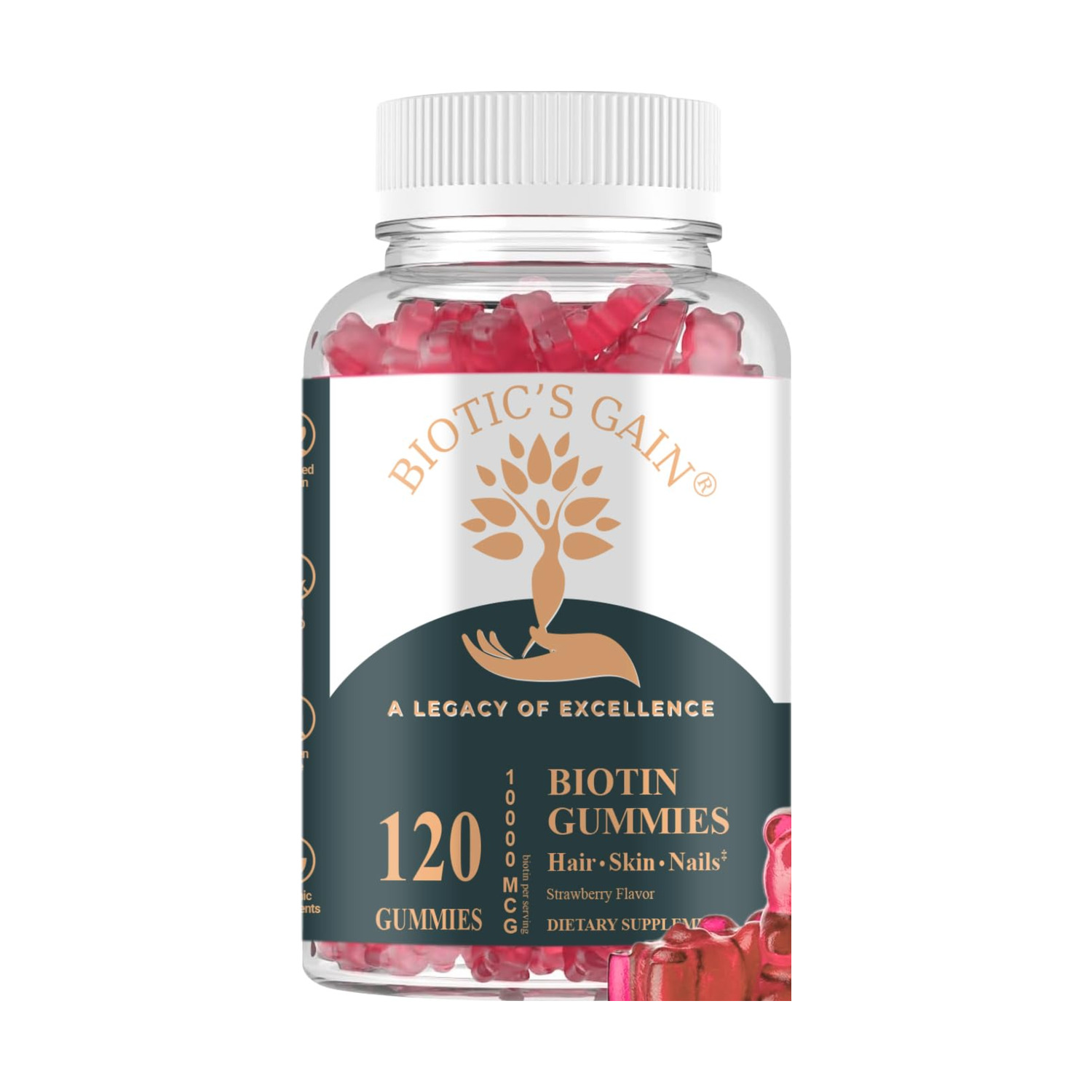
Biotic’s Gain High Strength Biotin Gummies supply 10,000mcg per serving, 120 gummies per jar. The nutrient reference value for biotin is 50mcg a day, so that is a high-strength product by any measure. They are a food supplement, meant to sit alongside a varied diet rather than to replace one.
When to see your GP
Speak to a GP rather than a shop if the shedding continues past about three months, if you can see the scalp through the hair in defined areas, if hair comes out in patches, or if it arrives alongside other changes you have noticed in yourself. Those are worth proper investigation rather than guesswork, and a supplement is not the answer to them.
Biotic’s Gain products are food supplements and are not medicines. They are not intended to diagnose, treat, cure or prevent any disease and should not replace a varied and balanced diet. If you are pregnant, breastfeeding, taking medication or living with an existing health condition, speak to your GP or pharmacist first.

Leave a Reply