

It happens gradually. You start a joint chew. A probiotic goes on the shelf next to it. Autumn arrives and a coat chew joins the pile. Six months later your dog is on four complementary feeds and you’ve never sat down and added up what’s actually in them.
This is worth thinking about, though probably not for the reason you’d expect.
Most nutrients aren’t the problem
The water-soluble vitamins, the B group and vitamin C, aren’t stored by the body in any meaningful quantity. Excess is filtered out. That’s why consistency matters more than dose with something like biotin, and it’s also why doubling up on them is rarely a concern.
Probiotics and glucosamine are similarly forgiving. There’s no accumulation mechanism to worry about.
The fat-soluble ones deserve attention
Vitamins A, D, E and K are stored in body fat and the liver rather than excreted, which means they can build up over time. Vitamin D in particular has a genuinely narrow margin in dogs, and vitamin A accumulation is well documented.
The realistic risk isn’t a single supplement. It’s stacking a broad multivitamin on top of a fortified complete food, plus a second product that also happens to include the same fat-soluble vitamins, and none of them being counted together. Worth remembering that the complete food is the thing doing the heavy lifting here: every chew you add on top is a complementary feed, which by definition sits alongside that diet rather than replacing any part of it.
Zinc is worth a similar mention. It is a trace mineral and a common ingredient in coat formulas, and it competes with copper for absorption, so a consistently high intake from several sources at once isn’t ideal. This is a reason to count what is on the label, not a claim about what zinc does.
The practical approach
Get every tub you’re using out on the counter and read the labels side by side. You’re looking for the same nutrient appearing in two or three products at a meaningful level. Most of the time you’ll find one or two overlaps and nothing alarming.
Where there’s genuine overlap, consolidating is usually the answer. One multivitamin covering general nutrition, plus at most one other complementary feed, is a cleaner arrangement than four overlapping tubs. It’s also cheaper and easier to stay consistent with. If you are not sure which of them your dog needs at all, that is a question for your vet rather than for a product page.
When to ask a vet
If your dog is on prescribed medication, has a diagnosed liver or kidney condition, or is on a therapeutic diet, run any supplement plan past your vet before adding to it. Same if you notice appetite changes, unusual lethargy or digestive upset after starting something new.
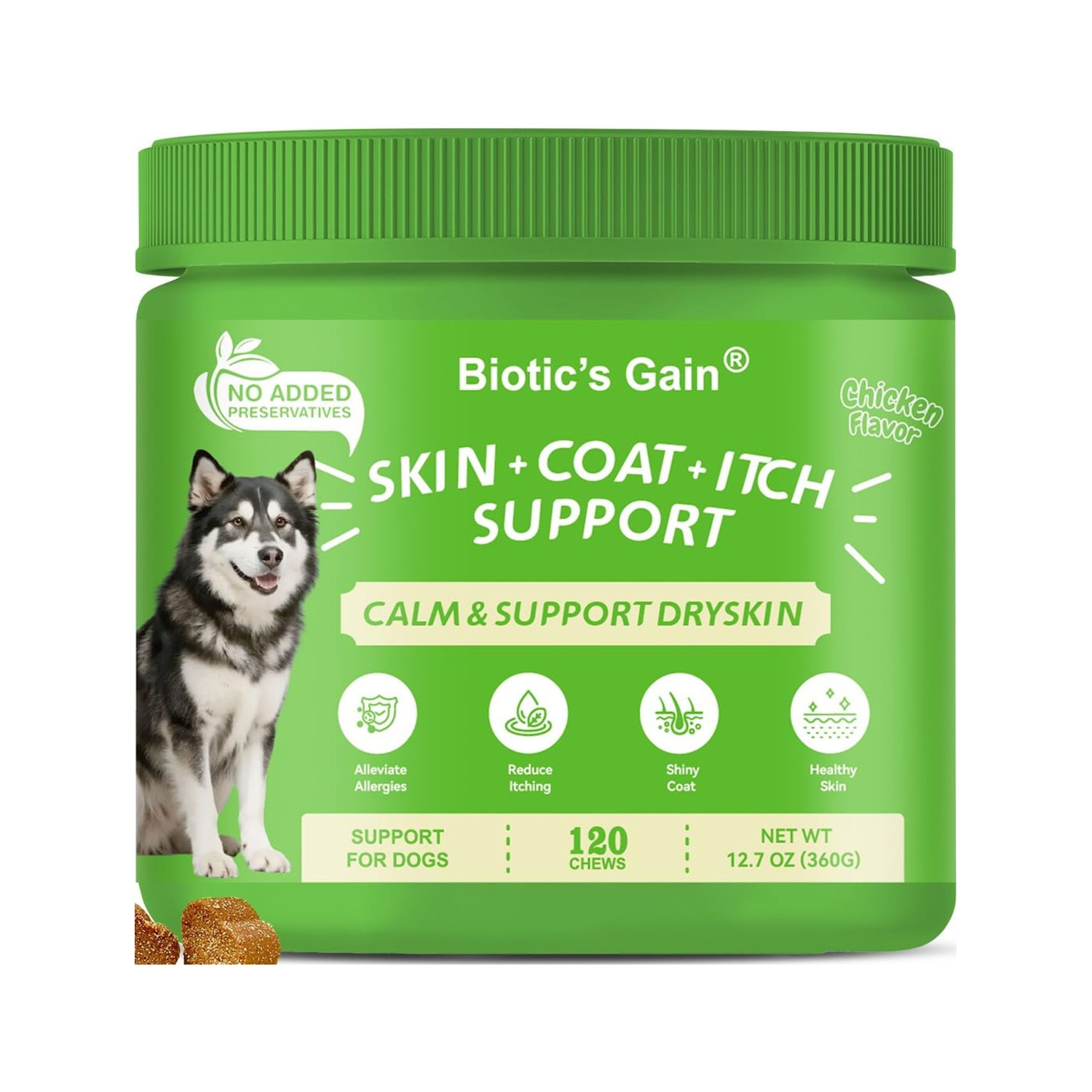
Each chew is a complementary feed with its own ingredient list. Four of them overlapping on the same nutrient is not broader cover, it is the same nutrient four times over and a more expensive routine.
Biotic’s Gain chews are complementary pet feed, given alongside a complete, balanced diet. They are not medicines and are not a substitute for veterinary advice. If your dog is unwell, on medication or has an ongoing condition, speak to your vet.
Leave a Reply