
An older dog usually needs the same number of walks, not fewer — just shorter, flatter and slower ones, with the hard parts taken out. Most settle better into a daily rhythm than into one long weekend outing followed by two quiet days, because stiffness tends to follow a day that was unusually big. Watch for a dog that starts well and fades, lags on the way home, is slow to get up afterwards, or hesitates at stairs and the car. Keep to even ground, allow a few minutes of easy movement before anything brisk, and let sniffing do some of the work. Any sudden change in what a dog will walk is a vet appointment, not a lighter lead.
Older is not the same as unfit
The common mistake is to treat age itself as the reason to cut back. Plenty of ten-year-old dogs walk further and more comfortably than six-year-old dogs who have been carrying extra weight and doing nothing all week. What actually changes with age is recovery and tolerance for variation. Muscle mass drops off if it is not used, joints are less forgiving of a sudden big day, and the margin between a walk that suits the dog and one that leaves them sore narrows.
That cuts both ways. Doing less because a dog is old is how the muscle that supports the joints disappears, which makes the next walk harder again. The aim is not less movement but steadier, more predictable movement.
What to change about the walk
In rough order of how much difference it makes:
- Pace. Let the dog set it. A dog who is allowed to walk at their own speed and stop when they want to will usually cover more ground, more comfortably, than one being towed along at a human pace.
- Length. Shorter and more often beats long and occasional. Two or three twenty-minute walks suit many older dogs better than one hour-long outing.
- Terrain. Even, grippy ground — grass, firm paths, short dry grass — rather than deep sand, rough fields, slippery wet decking or long flights of steps.
- Intensity spikes. The ball thrower is usually the thing to retire first. Repeated sprint-and-stop turns at full speed are harder on an older dog than the whole rest of the walk put together.
- Warming up. Five minutes of gentle walking before anything brisk, instead of opening the door and setting off at speed from a cold start on a chilly morning.
Why frequency beats length
Dogs do not pace themselves the way people do. An enthusiastic dog will often keep going well past the point that suits them, because adrenaline and interest mask discomfort until the walk ends. The soreness arrives later, at home, which is why owners frequently miss the connection between Sunday’s big walk and Monday’s stiff dog.
Spreading the same total distance across more, shorter outings takes that spike away. It also keeps the day structured, which matters for dogs whose sleep has become more broken with age. How much exercise a dog actually needs goes into why duration is a poor unit of measurement in the first place.
Reading the dog, during and after
The useful signals are mostly about timing rather than drama. During the walk: dropping behind having started keen, sitting down unprompted, turning for home, or a change in gait such as a shortened stride or a head bob that appears as the walk goes on. Afterwards, within the next few hours and the following morning: slow to get up from lying down, reluctant on stairs, hesitating before jumping into the car, lying down more heavily, or licking at a particular joint.
A dog who is stiff the morning after is telling you yesterday was too much, not that they need to stop walking. Trim about a quarter off the distance, keep the frequency, and see whether the morning changes. Signs your dog’s joints are getting stiff covers what to look for in more detail, and what causes joint stiffness in dogs explains why weight and activity levels matter so much.
Stairs, cars and getting in and out
For many older dogs the walk itself is not the hard part — the kerbs, steps and the boot are. A ramp into the car, a rug or runner on a slippery hallway floor, and lifting rather than letting a dog jump down from height all remove repeated jarring loads that the dog would otherwise take several times a day.
Nails are worth a mention here too. Long nails change how a dog’s foot meets the ground and make slippery floors worse, and a dog walking less on hard surfaces wears them down less. Check them more often than you used to.
Letting sniffing carry some of the load
A walk is mental work as well as physical, and the mental part does not cost the joints anything. A twenty-minute wander where the dog is allowed to stop and investigate will tire them more satisfyingly than a brisk twenty minutes on a short lead, and it gives an older dog a way to come home content without having covered more ground than suits them.
On days when the weather or the dog rules out a walk, scattering their meal in the garden or across a towel on the kitchen floor does a similar job. Our older dogs guide has more on adjusting a routine as a dog ages.
Where the Joint Supplement chews sit
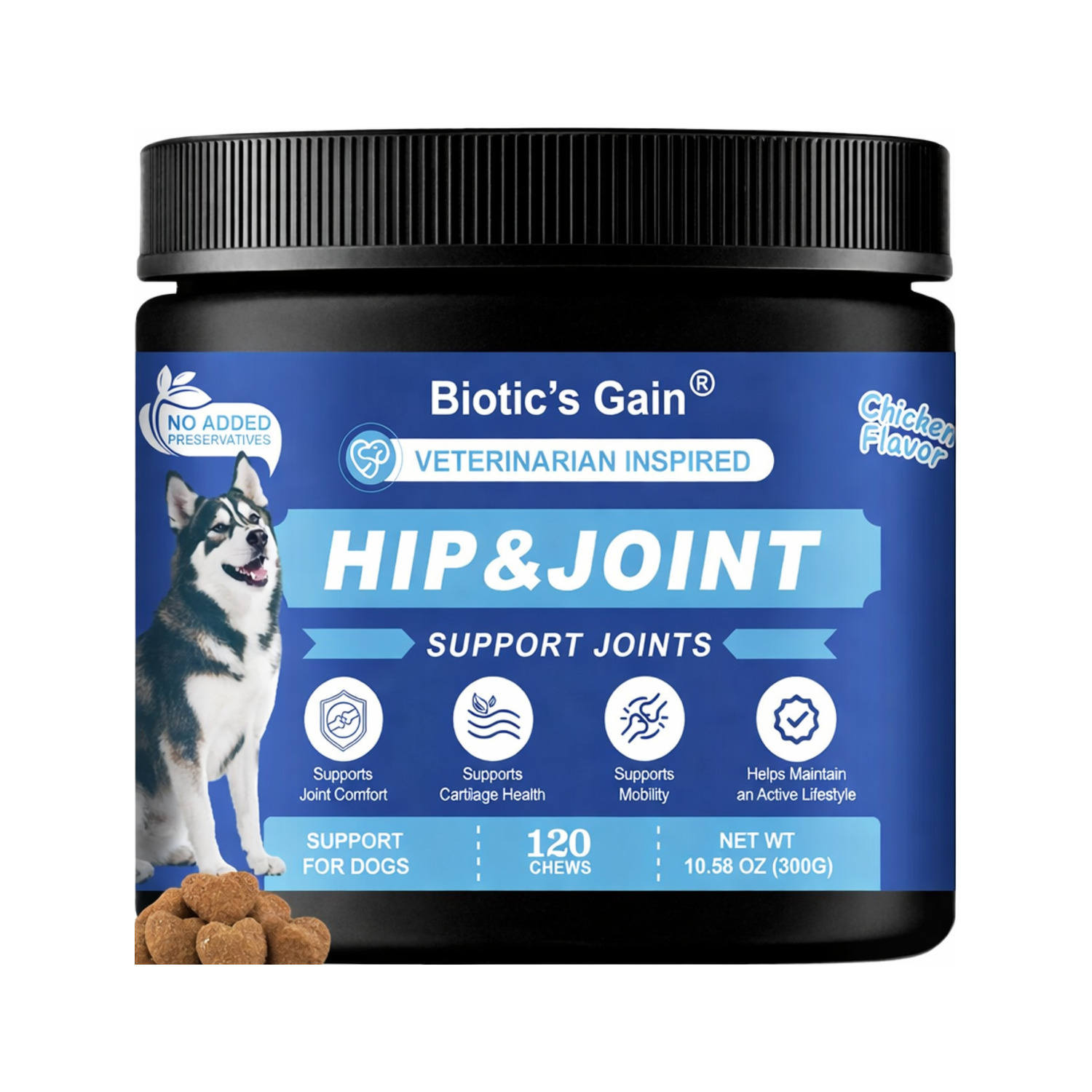
Biotic’s Gain Joint Supplements for Dogs with Glucosamine are soft chews, fed alongside a complete diet according to the feeding guide on the pack, which is sized to the dog’s weight. Glucosamine is an amino sugar that occurs naturally in cartilage. That is a description of the ingredient and nothing more.
Being straight about it: neither glucosamine nor chondroitin has an authorised claim in Great Britain, and wording such as “helps maintain joint health” or “keeps joints supple and flexible” sits on the rejected list, so you will not see it from us. The chews are a complementary feed, which means they sit beside a complete diet rather than replacing it, and a complementary feed cannot claim to treat, prevent or cure anything. Weight, consistent gentle exercise and a comfortable home set-up are the things that genuinely change how an older dog moves.
When to book a vet appointment
Age is not a diagnosis, and a lot of what gets written off as a dog slowing down turns out to be something treatable. Book an appointment if any of this applies:
- A limp, or a change in gait, that lasts more than a day or two, or that comes and goes.
- A sudden refusal to walk, climb stairs or get into the car when they managed it last week.
- Yelping, flinching when touched, or guarding a particular leg or the back.
- Getting tired far sooner than usual, coughing on walks, or breathing hard long after stopping — stamina changes are not always about joints.
- Weight gain or loss without a change in feeding, or a dog who seems disorientated on familiar routes.
Speak to your vet before starting any new supplement for an older dog, particularly if they are already on medication or being treated for anything — your vet knows the dog and can say what is worth doing.
Related reading
Biotic’s Gain dog chews are a complementary feed, not a medicine, and are not intended to diagnose, treat, cure or prevent any condition. Feed alongside a complete, balanced diet according to the guide on the pack. If your dog is unwell, on medication, pregnant or showing any of the signs above, speak to your vet.


Leave a Reply