
Skin is built from the same raw materials as everything else in the body, so what it needs from food is fairly unremarkable: enough protein to make its structural proteins, enough fat for the barrier that holds water in, and the ordinary range of vitamins and minerals that metabolism runs on. There is no single skin nutrient, and no food resurfaces anything. A diet that is adequate overall gives skin what it needs; correcting a genuine shortfall can show, while piling more on top of sufficiency does not. In Great Britain only a closed list of authorised wordings may be used about any nutrient, and every one of them says “normal”.
What skin is actually made of
The outer layer, the epidermis, is mostly one cell type. Keratinocytes are made at the base, flatten as they travel upwards, fill with keratin, and end up as the dead, overlapping plates of the stratum corneum that you can actually touch. Underneath sits the dermis, which is largely collagen and elastin suspended in a water-holding matrix, threaded with blood vessels, nerves and glands. Below that is subcutaneous fat.
The whole of the epidermis is replaced on a rolling basis, taking roughly a month to travel from the bottom to being shed. That single fact explains most of the disappointment people feel about diet and skin. Nothing eaten yesterday is visible today, and anything that does register has to work its way up through weeks of cell production first. There is more on how that outer layer behaves in what your skin barrier actually does.
Protein is the raw material
Keratin is a protein. So are collagen and elastin. If the diet is short of protein over a long period, the body has to prioritise, and structural tissue that is constantly being rebuilt is an obvious place for the shortfall to show. This is why protein-energy malnutrition has visible effects on skin and hair, and it is also why topping up an already adequate intake does not produce the mirror image of that.
The UK reference nutrient intake is 0.75g of protein per kilogram of bodyweight a day, which works out at roughly 45g for an average woman and 55g for an average man. Most UK adults clear that comfortably without thinking about it. People training hard, eating in a deficit, or older adults losing appetite are the ones who sometimes do not.
Four authorised claims exist for protein in Great Britain, and they are used exactly as written:
- Protein contributes to a growth in muscle mass
- Protein contributes to the maintenance of muscle mass
- Protein contributes to the maintenance of normal bones
- Protein is needed for normal growth and development of bone in children
Note what is not on that list. There is no authorised claim connecting protein to skin, however reasonable the biology sounds. The claims belong to the nutrient rather than to any brand, and they apply to a chicken breast exactly as much as to a tub of powder.
Fat, and the barrier that holds water in
The stratum corneum is often described as bricks and mortar: flattened cells set in a lipid mixture of ceramides, cholesterol and free fatty acids. That mortar is what limits how fast water evaporates out of you. Linoleic acid, one of the fatty acids involved, cannot be made by the body and has to come from the diet.
In practice, very few people in the UK eat so little fat that this becomes a problem. It happens with severe, prolonged restriction rather than with ordinary dieting. Oily fish, nuts, seeds, olive oil and rapeseed oil all contribute, and a diet containing any of them regularly is not short. As with protein, there is no authorised wording permitting anyone to claim that dietary fat changes how skin looks.
The vitamins and minerals running in the background
Skin cells divide quickly, and fast-dividing tissue is sensitive to gaps in the micronutrients that general metabolism depends on. That is the honest version of the argument for a varied diet. It is not that any one vitamin is a skin vitamin; it is that a cell dividing every few days needs the whole toolkit present.
Biotin is the nutrient most often attached to skin in advertising, and it is one of the few with authorised wording that mentions skin at all. Great Britain authorises seven claims for it:
- Biotin contributes to normal energy-yielding metabolism
- Biotin contributes to normal macronutrient metabolism
- Biotin contributes to the normal functioning of the nervous system
- Biotin contributes to normal psychological function
- Biotin contributes to the maintenance of normal hair
- Biotin contributes to the maintenance of normal skin
- Biotin contributes to the maintenance of normal mucous membranes
Two points about that list matter. The word “normal” cannot be dropped and cannot be traded up: clearer, plumper, brighter or better-hydrated skin is not authorised wording, and neither is anything with “improved” in it. And nails are absent. There is no authorised nails claim for biotin in Great Britain, which is why you will not see one here even though the category is full of them.
The claims are also conditional. A food has to qualify as at least a source of the nutrient before the wording can be used at all.
Vitamin C, and the one claim that mentions collagen
One authorised wording connects a nutrient to collagen, and it belongs to vitamin C, not to collagen: “Vitamin C contributes to normal collagen formation for the normal function of blood vessels, bones, cartilage, gums, skin and teeth”. That is a claim about what vitamin C does inside the body, conditional on the food qualifying as a source of vitamin C. It is not a back door for a collagen powder, and quoting it beside a product that contains no vitamin C would be misleading.
Collagen itself has no authorised claim of its own in Great Britain. Four proposed collagen claims were assessed and rejected, including ones about joint function and about skin firmness and elasticity. Rejected is a stronger status than unproven, and it means the wording cannot be used at all. Our collagen guide sets out what can honestly be said instead.
Water belongs in the diet column too
Drinking enough matters, but not in the way the phrase “drink more water for glowing skin” implies. Skin hydration is governed mostly by the barrier and how fast water escapes through it, not by how much you poured in that morning. Correcting genuine dehydration shows; drinking beyond sufficiency is filtered out within an hour or two. We went through the plumbing of that in does drinking more water actually change your skin, and the mineral side in what electrolytes are and when you need them.
What “eat for your skin” advice usually gets wrong
Three habits of thought cause most of the trouble. The first is the hero ingredient, where one food is credited with an effect that only a whole adequate diet produces. The second is the assumption that more of a sufficient nutrient keeps paying: past the point where a shortfall is corrected, the body simply excretes or stores the surplus. The third is impatience. Judging anything after a fortnight guarantees a wrong answer, because the tissue has not finished turning over.
A sensible timescale is eight to twelve weeks for skin, and three to six months before drawing conclusions about hair, which grows at roughly a centimetre a month. Change one thing at a time, keep everything else steady, and take a photograph at the start so you are comparing with something other than memory.
Where the Biotin Gummies sit
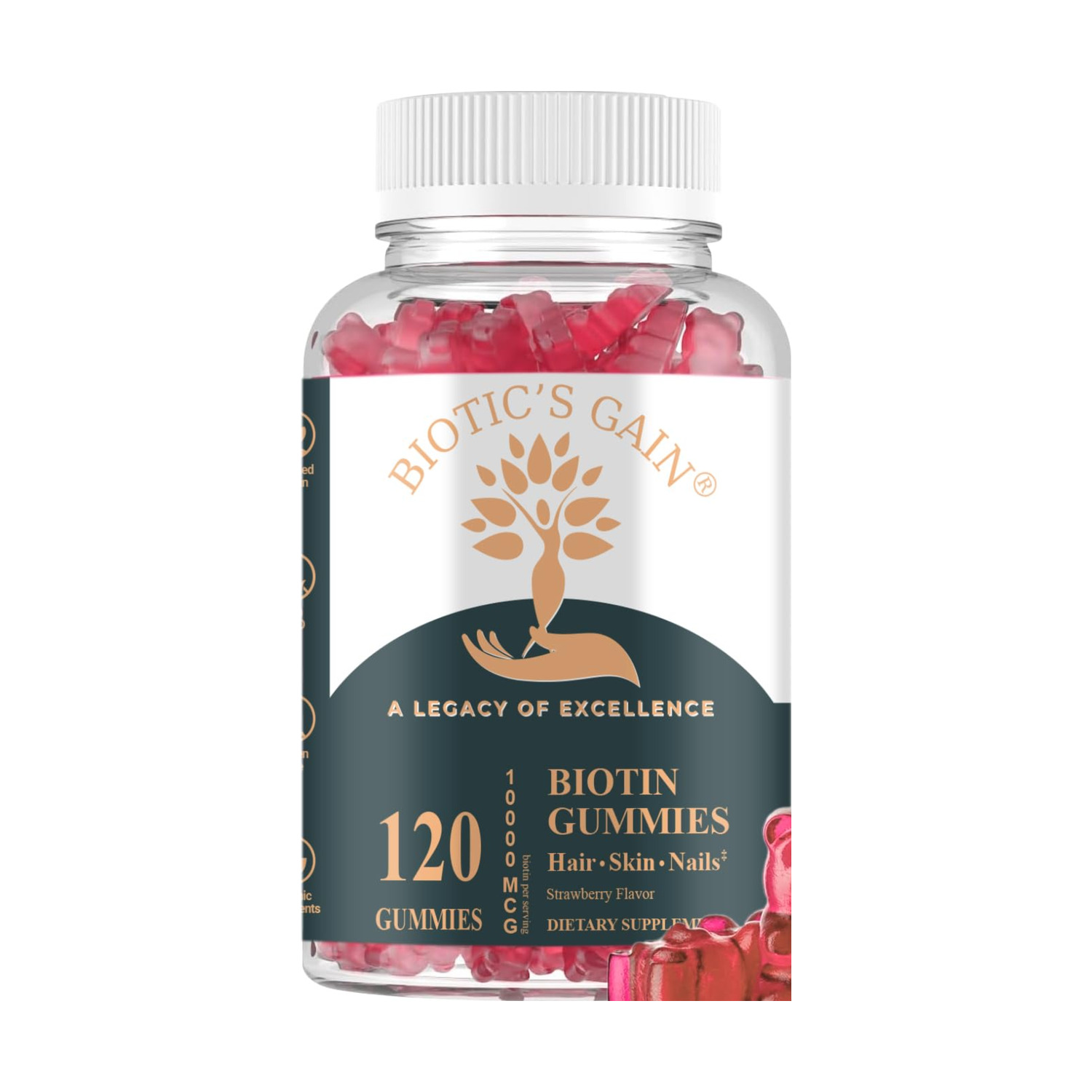
Biotic’s Gain Biotin Gummies supply 10,000mcg of biotin per daily serving. They are a food supplement, which means they sit alongside a varied, balanced diet rather than replacing part of it, and the only things we say about biotin are the seven authorised wordings above, used as written. Two of them mention hair and skin. None of them mentions nails, and none of them promises anything beyond “normal”.
More on the hair side of this is in our thinning hair guide.
When to speak to a pharmacist or GP
Diet is the wrong first place to look for some skin changes. Book an appointment rather than adjusting your shopping list if you have a rash that is spreading, painful or weeping, a mole that is changing, skin changes that came on suddenly alongside feeling unwell, or hair loss that is patchy, rapid or accompanied by scalp symptoms. The same applies if you are on prescribed medication, pregnant or breastfeeding and thinking about starting a supplement.
Related reading
Biotic’s Gain supplements are food supplements and are not a substitute for a varied, balanced diet or a healthy lifestyle. They are not intended to diagnose, treat, prevent or cure any condition. If you are pregnant, breastfeeding, taking medication or under medical supervision, speak to your GP or pharmacist before starting a new supplement.


Leave a Reply