
Drinking more water will not, on its own, transform dry skin. Water you swallow is absorbed in the gut, carried away in the blood and used wherever the body needs it most, and skin is not first in that queue. How hydrated skin looks and feels is set mainly by the outer barrier that stops water escaping, not by how much you drank at lunch. Being genuinely short of fluid does show, though: skin looks duller and springs back more slowly, and the mouth and lips go dry first. So fluid is a floor rather than a lever. Meet it, then look at the barrier.
Where the water you drink actually goes
A glass of water leaves the stomach quickly and is absorbed across the wall of the small intestine into the bloodstream, where it joins the body’s total water pool — somewhere around 55 to 60 per cent of an adult’s weight, most of it inside cells.
What the body does next is regulate, not distribute by request. The kidneys hold sodium and other electrolytes inside a narrow band by deciding how much water to keep and how much to pass, so a surplus is filtered out within an hour or two. There is no reservoir to fill, and no part of the body can ask for a larger share of a glass because it happens to look tired.
Skin holds a great deal of water by volume, mostly in the dermis, the thick living layer underneath, and it draws that from the circulation like any other tissue. When fluid is short, the body protects blood volume and brain function long before it protects how plump the dermis feels.
What “hydrated skin” actually means
The part of skin anyone judges by touch is the stratum corneum, the top few dozen cells of the epidermis — often described as bricks and mortar, flattened dead cells held in a matrix of lipids, with water-attracting compounds inside them usually called natural moisturising factors. Water constantly moves up through this layer and evaporates off the surface. That is normal, and it has a name: transepidermal water loss.
Skin that feels tight, rough or flaky is usually losing water through that layer faster than the layers beneath can resupply it, and the cause is almost always something that has thinned the mortar — hot showers, strong detergents, over-washing, wind, low humidity, or simply age. It is rarely a shortage of water in the body as a whole. How that layer is put together is covered in what your skin barrier actually does.
What changes when you drink more, and what does not
Two very different starting points get muddled here, which is where most of the arguing comes from. If you are genuinely running short of fluid — a hot week, a stomach bug, long shifts where you forget to drink, two coffees and nothing else before mid-afternoon — then correcting that does show. Skin is less elastic when the body is dry, so it springs back more slowly when pinched, and colour looks flatter. Fix the shortfall and the change is real, if undramatic.
If you are already drinking enough, extra glasses mostly become extra trips to the loo. There is no mechanism by which three litres instead of two sends surplus water to the cheeks. That is the honest answer, and not a popular one, because the opposite is easy to sell and costs nothing to say.
How much, and how to tell
UK public health advice is six to eight glasses or cups a day, and that total includes water, lower-fat milk, sugar-free drinks, tea and coffee. In litres it comes to roughly 1.5 to 2, on top of what arrives in food — fruit, vegetables, soups and stews contribute between a fifth and a third of most people’s intake. You will need more in hot weather, when exercising, and when ill with a fever or an upset stomach.
Thirst is a late signal rather than an early one, and it blunts with age, which is why older adults can be short of fluid without feeling it. Urine colour is the most practical gauge anyone has: pale straw is fine, consistently dark means drink. A dry mouth, an afternoon headache and going a long stretch without needing the loo all point the same way. Tea and coffee count towards the total — caffeine’s mild diuretic effect does not cancel out the cup it arrived in. Alcohol is the genuine exception, since it suppresses the hormone that tells the kidneys to hold water back.
What the rules let a supplement say about skin
In Great Britain, only claims on the GB nutrition and health claims register may be used on a food or a food supplement. It is a closed list, and it is worth knowing how short it is on this subject. Biotin has seven authorised claims; two of them touch on hair and skin, and they read exactly like this:
Biotin contributes to the maintenance of normal hair.
Biotin contributes to the maintenance of normal skin.
The other five cover normal energy-yielding metabolism, normal macronutrient metabolism, the normal functioning of the nervous system, normal psychological function and the maintenance of normal mucous membranes. That is the complete set, and “normal” is doing real work in every one. It cannot be dropped or traded up: maintenance of normal skin is authorised, while clearer, plumper or better-hydrated skin is not. There is also no authorised nails claim for biotin in Great Britain, which is why you will not find one on this site, however often “hair, skin and nails” appears on other labels.
Collagen has no authorised claim of its own at all, and four proposed collagen claims, including ones about skin firmness and elasticity, sit on the rejected list. The only authorised wording that even mentions collagen belongs to vitamin C, and it is conditional on the product qualifying as a source of vitamin C — so it is a vitamin C claim, not a side door for a collagen powder. And there is no authorised claim, for any nutrient, about hydrating skin. Nobody selling a supplement in Great Britain may tell you theirs does that.
Where the Biotin Gummies sit
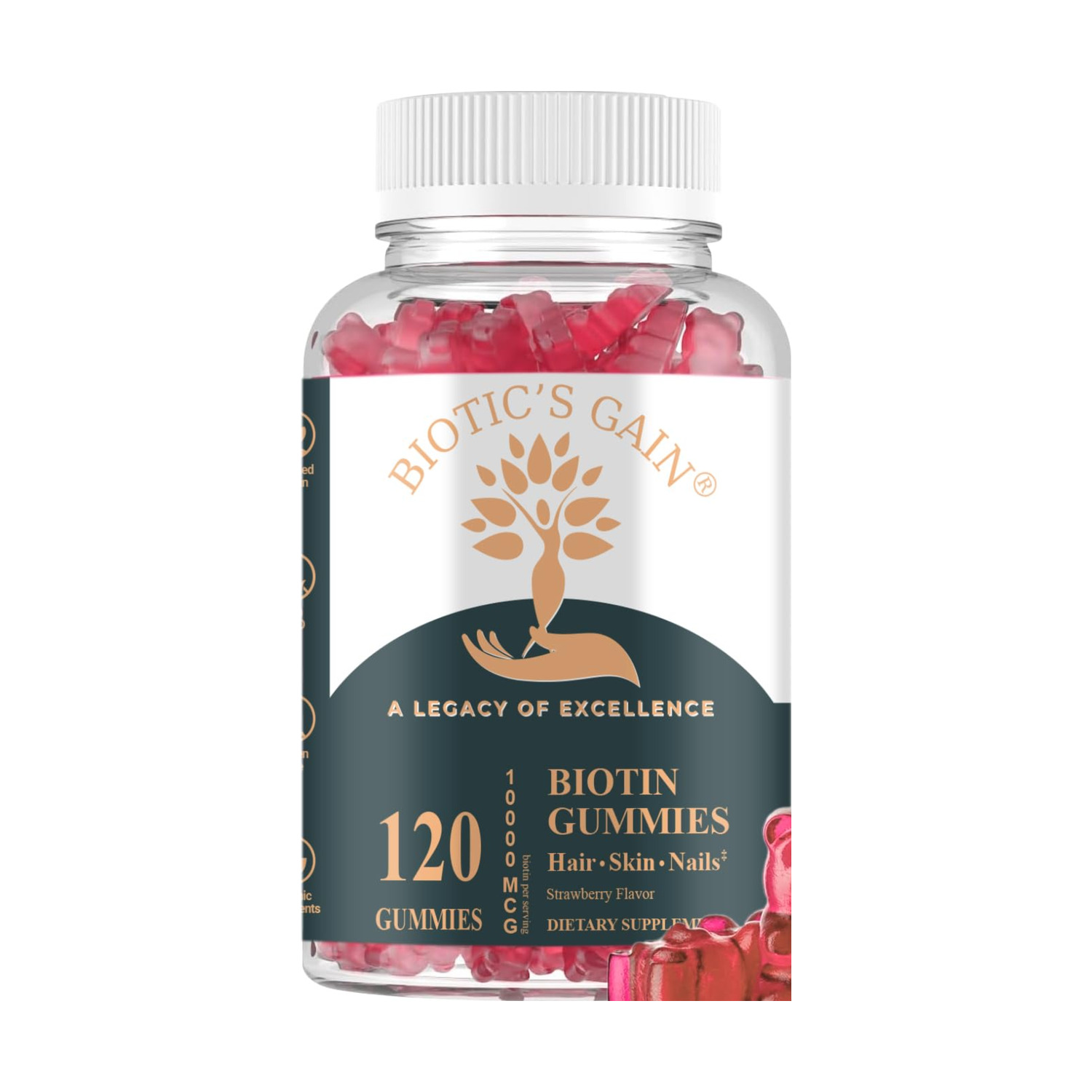
Biotic’s Gain Biotin Gummies supply 10,000mcg of biotin per daily serving. Biotin is a water-soluble B vitamin found in eggs, liver, nuts, seeds, salmon and sweet potato, and a gummy is simply a convenient way of taking a measured amount of it. The authorised claims above belong to the nutrient rather than to the format or the brand, and they apply on the condition that the product is at least a source of biotin. A food supplement is not a substitute for a varied, balanced diet.
Whether it matters if you take a supplement with food covers the question people usually ask next, and the thinning hair guide sets out what is worth knowing before buying anything at all.
When to speak to a pharmacist or GP
Dry skin that settles with a plain emollient and fewer hot showers is ordinary. Worth getting looked at: skin that cracks, weeps, bleeds or stays inflamed; itching that keeps you awake; a change that came on suddenly or sits in one patch; dryness alongside thirst, tiredness or weight change you cannot explain; anything spreading on a young child’s skin.
One note on the other extreme: drinking very large volumes of plain water very quickly can dilute blood sodium, which is dangerous. If you have a heart or kidney condition, take your fluid target from your clinician rather than from an article.
Related reading
Biotic’s Gain products are food supplements and are not a substitute for a varied, balanced diet or a healthy lifestyle. Nothing here is medical advice. If you have a health condition, are pregnant or breastfeeding, or are taking medication, speak to a pharmacist or your GP before starting a supplement.


Leave a Reply