
Your skin barrier is the outermost layer of the epidermis: flattened, dead cells packed with keratin, held together by a mortar of ceramides, cholesterol and fatty acids. Its job is unglamorous but vital — keep water in, and keep irritants and microbes out. When it is intact, skin feels comfortable and looks even. When it is disrupted by over-washing, harsh detergents, cold dry air or too much exfoliation, water escapes faster than it is replaced, and skin turns tight, flaky and easily stung by products that never used to sting. Most of that disruption settles over a few weeks once you stop doing whatever caused it. Biotin contributes to the maintenance of normal skin.
Bricks, mortar and a slightly acidic surface
The usual picture is a brick wall, and it holds up well. The bricks are corneocytes — skin cells that have finished their working life, lost their nucleus and filled up with keratin. The mortar is a lipid mixture laid down as those cells flatten: roughly half ceramides, about a quarter cholesterol, the rest free fatty acids. That ratio matters more than the total amount, because stripping out one component stops the mortar behaving like a waterproof layer at all.
Inside the bricks sits a set of small water-binding molecules — amino acids, urea, lactate and salts — known as natural moisturising factor, and they are what let the surface hold water in a dry room. On top of everything is the acid mantle, which keeps the skin at a pH of roughly 4.7 to 5.5. That acidity is not decorative: the enzymes that build barrier lipids work best in it, which is one reason a strongly alkaline bar soap leaves skin feeling tight long after it has been rinsed off.
How you can tell the barrier is struggling
There is no home test, but the pattern is recognisable. Skin feels tight within a minute or two of drying off rather than simply clean. Fine flaking appears, often around the nose, the shins or the backs of the hands. Texture turns rough under the fingertips even where nothing is visible. Redness lingers after a hot shower or a cold walk. Most telling of all, products you have used happily for years start to sting on contact — a reaction to an ordinary moisturiser usually says more about the state of the surface than about the moisturiser.
None of that is a diagnosis, and it is worth saying plainly that a compromised barrier is a description of a surface, not a medical condition. If skin is broken, weeping, painful or spreading, that is a conversation with a pharmacist or GP rather than a shopping decision.
What actually damages it
Water temperature and contact time do more than most people expect. A long hot shower swells the corneocytes and dissolves surface lipids; ten minutes at a comfortable warmth is a very different exposure from twenty at the hottest setting. Strong foaming surfactants are the next culprit, because the qualities that make a cleanser feel satisfying — dense lather, a squeaky finish — come from the same chemistry that lifts lipids out of the mortar.
Then there is stacking. Acids, retinoids, scrubs and cleansing brushes are each defensible alone; used on the same face on the same evening, several times a week, they remove the surface faster than it can be rebuilt. Winter adds its own load: cold outdoor air holds very little moisture, central heating dries the indoor air further, and the swing between the two is harder on skin than either alone. Hard water, wind and repeated hand-washing at work finish the list.
How long recovery actually takes
Two clocks run at once. The first is water loss, which starts improving within hours of stopping the aggravation and is largely settled within a few days. The second is the rebuilding of the lipid mortar, which runs at the speed of epidermal turnover — roughly four weeks in a young adult, noticeably slower from middle age onwards. So the honest timescale for judging a change to a routine is weeks, and the mistake almost everyone makes is to change three things at once, then change them all again on day five.
The same lag applies to hair, for the same reason — you are waiting on a biological cycle rather than on a product. We covered that timing in how hair actually grows, and the discipline is identical: pick one change, hold it, and judge it at the end of a cycle.
What to change, in plain terms
Shorter and cooler washes. A cleanser that does not leave a squeaky finish. Moisturiser applied while skin is still damp, so you are trapping water that is already there rather than trying to add it. A stripped-back routine for two or three weeks — cleanser, moisturiser, sunscreen in the daytime, nothing else — then one item reintroduced at a time. A humidifier, or simply a bowl of water near a radiator, changes indoor air in winter. Gloves for washing up and for cold walks. None of it is exciting, and none of it needs another bottle.
Where diet and supplements fit
Skin is built from protein, and the barrier’s lipids are made by your own cells from the raw materials you supply, so a reasonable diet is doing the unglamorous work. Beyond that it pays to be precise about what may and may not be said, because supplement marketing in this category is full of wording that is not allowed in Great Britain.
Biotin has authorised claims on the GB register, and the two relevant here are that biotin contributes to the maintenance of normal skin and biotin contributes to the maintenance of normal hair. There is a third, that biotin contributes to the maintenance of normal mucous membranes. The word “normal” is load-bearing and cannot be dropped, and it cannot be traded up for “improved”, “stronger” or “glowing”. There is no authorised nails claim in Great Britain, so we do not make one, however often you see it elsewhere.
Collagen has no authorised claim of its own. Four proposed collagen claims sit on the rejected list, including ones about skin firmness and elasticity, so any collagen product discussed honestly has to stay descriptive — what it is, how it is processed, what happens to it after you swallow it. The only authorised wording that even mentions collagen belongs to a different nutrient: vitamin C contributes to normal collagen formation for the normal function of blood vessels, bones, cartilage, gums, skin and teeth. That is a vitamin C claim, conditional on the product being a source of vitamin C, and it is not a back door for a collagen powder. There is more on that in what happens to collagen when you swallow it.
When to ask someone rather than buy something
Speak to a pharmacist or your GP if skin is cracked, bleeding or weeping; if an area is hot, swollen or painful; if a patch is spreading or changing shape; if itching is keeping you awake; or if dryness has not budged after a few weeks of gentler handling. Sudden changes are worth a proper look rather than a new serum.
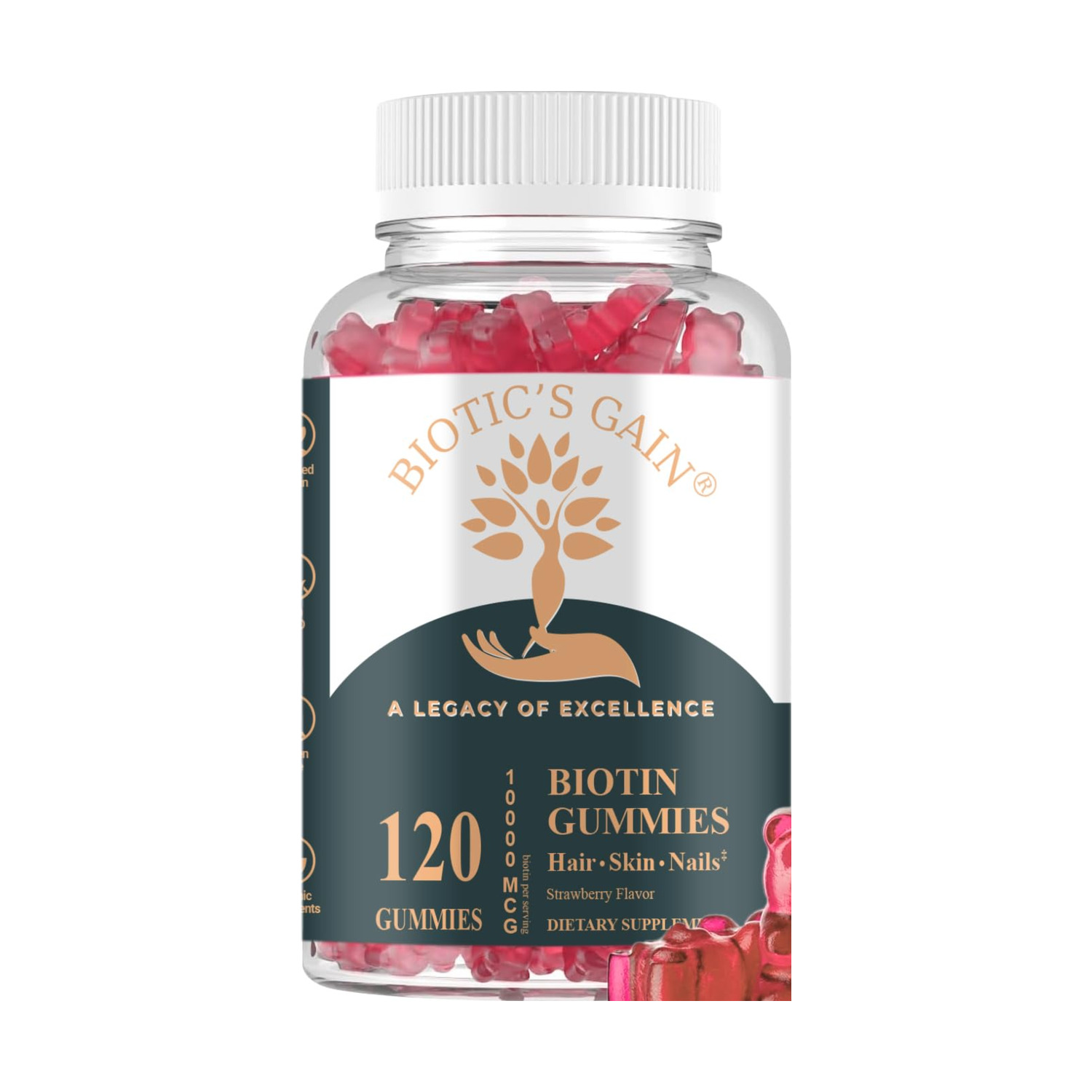
Our Biotin Gummies supply 10,000mcg of biotin per daily serving. They are a food supplement, not a substitute for a varied diet or for advice about your skin.
Related reading
Biotic’s Gain supplements are foods, not medicines. They are not intended to diagnose, treat, cure or prevent any condition. If you are pregnant, breastfeeding, taking medication or have an existing health concern, speak to your GP or pharmacist before starting a new supplement.


Leave a Reply