
Dogs that actually need a coat in winter are generally small, short-coated, very lean, elderly, or unwell — breeds like whippets, chihuahuas and greyhounds have little natural insulation and lose heat quickly, while older dogs and those with health conditions often struggle to regulate their temperature as well as they once did. Large, double-coated breeds such as huskies, German shepherds and Newfoundlands are usually the opposite case: they’re built for cold weather and a coat can do more harm than good by trapping heat, flattening the insulating undercoat, or simply being unnecessary. Size, coat type, age and health matter far more than the calendar date, so the honest answer is that some dogs need one and plenty of others genuinely don’t.
Coat type is the biggest factor
Double-coated breeds — huskies, malamutes, German shepherds, Newfoundlands, and many others bred originally for cold climates — grow a dense undercoat through autumn specifically to cope with winter. A jacket on top of that natural insulation is often unnecessary and can flatten the undercoat or trap moisture against the skin, which works against what the coat is doing naturally. Single-coated or very short-coated breeds, by contrast, have little to no natural insulation and lose body heat much faster in cold, wet weather.
Size and body condition
Smaller dogs lose heat faster than larger ones simply because they have more surface area relative to their body weight, which is part of why toy and small breeds often need a coat when a larger dog on the same walk doesn’t. Very lean dogs, including many sighthounds, have little body fat for insulation and can feel the cold sharply even with a full coat of fur. A whippet in a jumper on a frosty morning isn’t being fussed over unnecessarily — it’s a genuinely practical choice for that build.
Age and health conditions
Older dogs often regulate their body temperature less efficiently than younger dogs, and a coat is worth having to hand for a cold, damp walk, particularly for a dog that’s already slower to warm up or spends longer standing around during toileting. Our guide to older dogs covers more of the small adjustments worth making through winter. If a dog seems to be struggling more than usual with the cold, or shivering persistently, that is one for your vet rather than a wardrobe decision.
When a coat does more harm than good
A coat that’s too tight, left on indoors, or put on a breed that’s naturally built for the cold can cause more discomfort than it prevents, from overheating on a brisk walk to matting the fur underneath if it’s worn for long stretches. The test is usually simple: if a dog is visibly shivering, reluctant to go out, or seeking warmth indoors more than usual, a coat is worth trying; if a dog is bounding around enjoying the cold with a thick, dry coat of fur, it probably doesn’t need one.
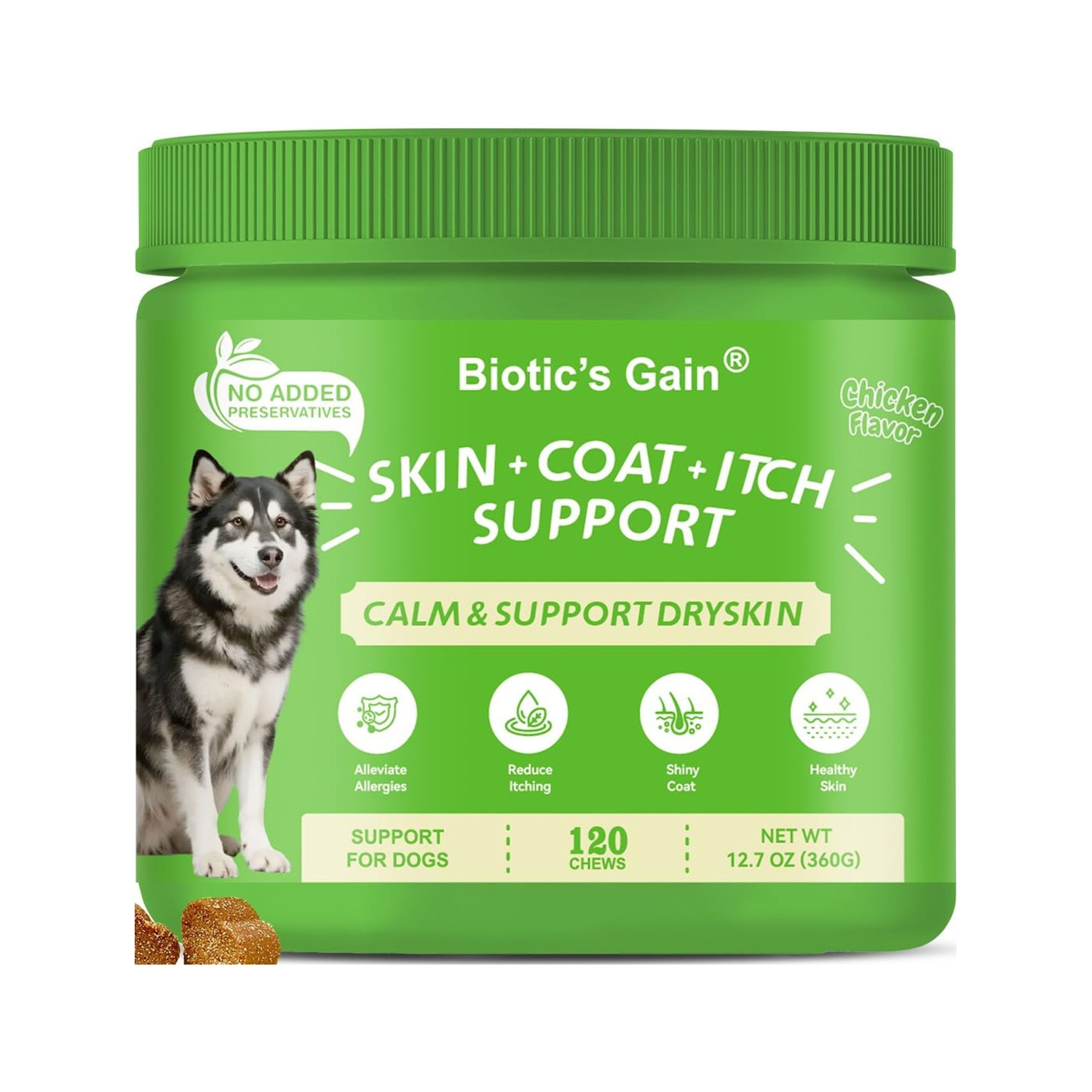
What’s in the Skin & Coat Chews
Biotic’s Gain Skin & Coat Chews are a complementary feed, fed alongside a complete and balanced diet rather than in place of any part of it. What’s in the tub: omega 3 as EPA and DHA, the long-chain fats a dog cannot make for itself and has to take in through food; biotin, which is vitamin B7, one of the B-group vitamins; and zinc, a trace mineral. There is no authorised GB claim for any of those nutrients in a complementary feed for dogs, so that list is a description of the ingredients and nothing more.
Biotic’s Gain dog chews are a complementary feed, not a medicine. They are not intended to diagnose, treat, cure or prevent any condition, and they are fed alongside a complete and balanced diet following the feeding guide on the pack. If your dog is unwell, on medication, pregnant or already under veterinary care, speak to your vet first.

Leave a Reply