
Cold weather does affect the skin, though it’s usually the indoor side of winter that matters more than the outdoor cold itself. Low outdoor humidity combined with central heating indoors strips moisture from the air far more than summer weather does, and skin loses water to that dry air faster than it can replace it, which is why dryness, tightness and flaking tend to show up from November onward even in people who don’t have particularly sensitive skin. Hot showers and baths, which feel especially appealing once it’s cold outside, strip natural oils at the same time. None of it is permanent or serious for most people, but a few small changes to routine are worth making through the coldest months.
It’s the indoor air, not just the outdoor cold
Outdoor humidity actually tends to drop in winter, and the air indoors is often drier still once central heating is running for most of the day. Skin naturally loses a small amount of water to the air around it, and that process speeds up when the surrounding air is dry, whatever the reason. Spending most of a winter day moving between a heated house, a heated office and a cold outdoor commute means skin rarely gets a break from one drying environment or another.
Why hot water works against you
A hot shower or bath feels like exactly the right thing on a cold evening, but water that’s genuinely hot strips away the skin’s natural oils faster than warm water does, leaving it more exposed to moisture loss afterwards rather than less. Turning the temperature down slightly and keeping showers a bit shorter through winter is worth doing, particularly for anyone who already notices tightness or flaking after washing.
Central heating and moisture loss
Radiators and heated air do their job by drying out the air in a room, which is efficient for warming a house quickly but not kind to skin that’s exposed to it for hours at a stretch, especially overnight. A humidifier in a bedroom, or simply not running the heating quite as high as it’ll go, is worth trying. It’s a similar principle to why skin often feels different on a long-haul flight, where cabin air is drier than almost anywhere else.
Simple changes worth making
Lower water temperature, a heavier moisturiser applied to slightly damp skin rather than fully dry skin, and cutting back on the very hottest room temperatures are all worth doing through the coldest months. If dryness turns into ongoing irritation, redness or itching that doesn’t settle with these changes, our guide to itchy skin goes into more detail on when it’s worth a closer look.
Where biotin and collagen fit in
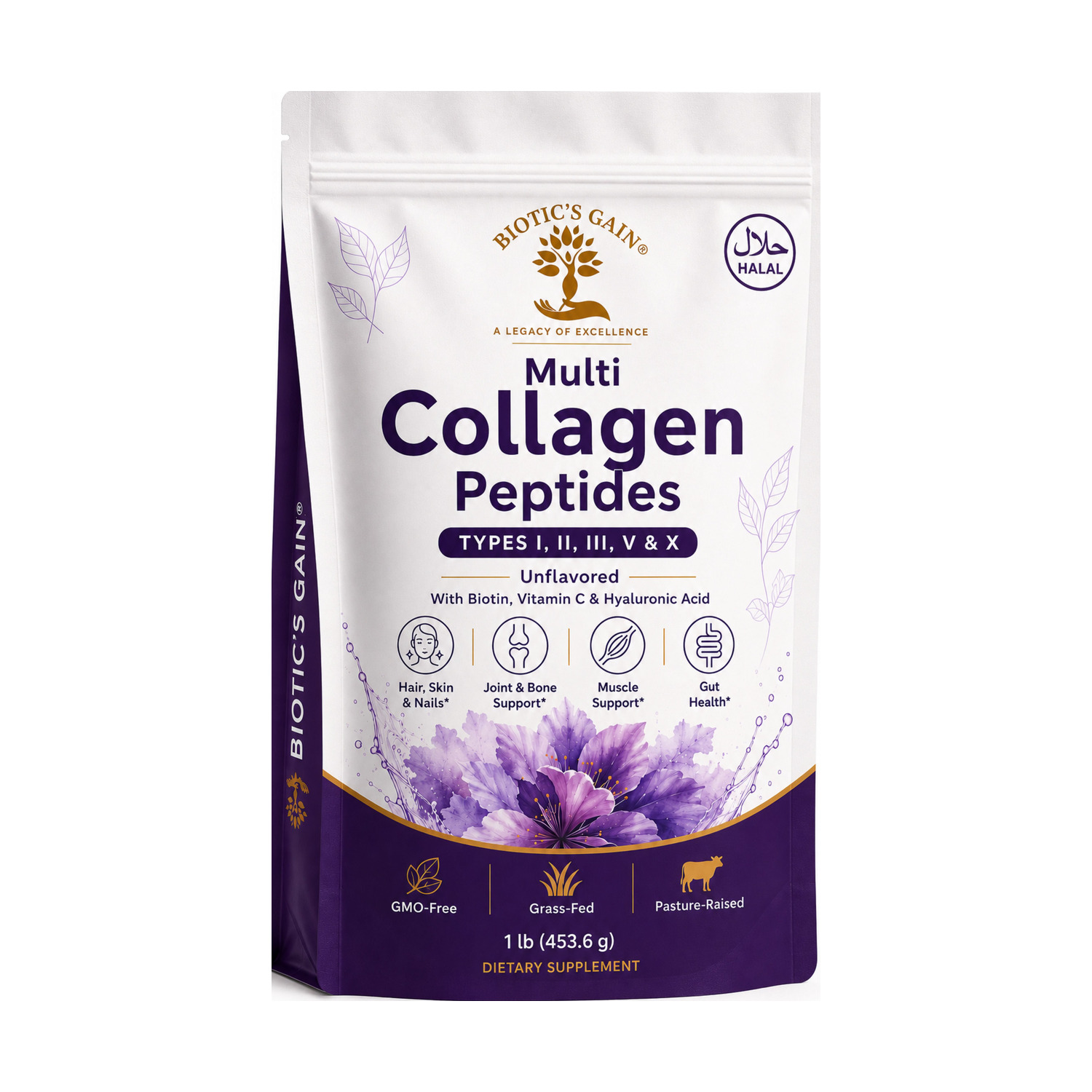
Biotin contributes to the maintenance of normal skin. That is the authorised wording in Great Britain and it is the wording we use: maintenance of what is normal, not improvement beyond it. The nutrient reference value for biotin is 50mcg a day, and Biotic’s Gain High Strength Biotin Gummies supply 10,000mcg a serving, 120 gummies a jar. Multi Collagen Peptides come in a 454g unflavoured tub. There is no authorised health claim for collagen in Great Britain, so we describe what is in the tub rather than what it does — our guide to collagen explains what it is and how people typically use it. Both are food supplements, meant to sit alongside a varied diet rather than to replace one.
Biotic’s Gain products are food supplements and are not medicines. They are not intended to diagnose, treat, cure or prevent any disease and should not replace a varied and balanced diet. If you are pregnant, breastfeeding, taking medication or living with an existing health condition, speak to your GP or pharmacist first.

Leave a Reply