
Biotin is a B vitamin found in a wide range of everyday foods, including eggs, liver, salmon, nuts, seeds, sweet potato and legumes. It is needed in very small amounts, which is why labels count it in micrograms rather than milligrams. A supplement does not replace food; it adds a measured, repeatable amount on top of whatever your meals happen to supply that week. In Great Britain, biotin carries seven authorised claims covering energy-yielding metabolism, macronutrient metabolism, the nervous system, psychological function, and the maintenance of normal hair, skin and mucous membranes.
Which Foods Actually Contain Biotin
Biotin, sometimes called vitamin B7, turns up across an ordinary shopping basket rather than in a handful of specialist foods. The better-known sources are:
- Egg yolk
- Liver and other offal
- Salmon and other oily fish
- Nuts, especially almonds, walnuts and peanuts
- Sunflower and other seeds
- Sweet potato
- Legumes, including soybeans and lentils
- Mushrooms
- Wholegrains
There is one quirk worth knowing. Raw egg white contains a protein called avidin, which binds biotin and stops it being absorbed. Cooking denatures avidin, so cooked eggs are a source while raw ones work against you. It is a footnote for most people, but it comes up often enough in the raw-egg corners of the internet to be worth stating plainly.
Why the Numbers Look So Small
Biotin is measured in micrograms, written as mcg or µg. A microgram is a thousandth of a milligram, and a millionth of a gram. The Nutrient Reference Value used on GB labels for biotin is 50mcg a day, which is a tiny quantity of material by any ordinary measure.
That is also why supplement figures look startling. A 10,000mcg gummy is 10mg, which still would not cover the base of a teaspoon. The gap between what a label says and what a portion looks like is a lot wider for biotin than for, say, protein.
What “Source of Biotin” Has to Mean
The phrase is not decorative. Under GB nutrition labelling rules, a product can only be described as a source of a vitamin if it supplies at least 15 per cent of the Nutrient Reference Value in the stated portion. For biotin that is 7.5mcg. “High in” requires double that.
This matters more than it sounds, because the authorised biotin claims are conditional on the product meeting that threshold in the first place. A product that does not clear it is not allowed to make the claims at all, however much it talks around them. If a label uses the claims, the arithmetic underneath has to work.
The Seven Authorised Claims, Word for Word
These are the only claims permitted for biotin in Great Britain, taken from the register as written:
- Biotin contributes to normal energy-yielding metabolism
- Biotin contributes to normal macronutrient metabolism
- Biotin contributes to the normal functioning of the nervous system
- Biotin contributes to normal psychological function
- Biotin contributes to the maintenance of normal hair
- Biotin contributes to the maintenance of normal skin
- Biotin contributes to the maintenance of normal mucous membranes
The word “normal” is doing real work in every one of them and cannot be swapped for “improved”, “thicker” or “faster”. And nails are not on the list, despite being printed on a great many biotin bottles. We wrote about why that gap exists in what biotin actually does, and what it isn’t allowed to claim.
Where a Supplement Fits Alongside Food
Food is variable. A week of eggs, salmon and almonds looks nothing like a week of toast, pasta and takeaways, and most people’s weeks sit somewhere between the two without ever being measured. A supplement does not make the food irrelevant. What it does is make one part of the picture consistent, at a figure printed on the pack rather than estimated after the fact.
That is the honest case for taking one, and it is a smaller claim than most marketing makes. If your diet already covers biotin comfortably, a supplement is adding to something you have. Whether that is worth doing is a personal call, and one worth taking to a pharmacist or GP if you are on medication or pregnant.
Reading a Biotin Label Properly
- Check the amount per serving, not per bottle. Serving size for gummies is often two, not one.
- Look for the NRV percentage. It tells you the scale of what you are taking at a glance.
- Read the claims. Authorised wording is a sign the maker has stayed inside the rules. Language about thickness, regrowth or strength is a sign they have not.
- Check what else is in it. Gummies carry sugar or sweeteners, and some products blend biotin with other vitamins you may already be taking.
Our Biotin Gummies
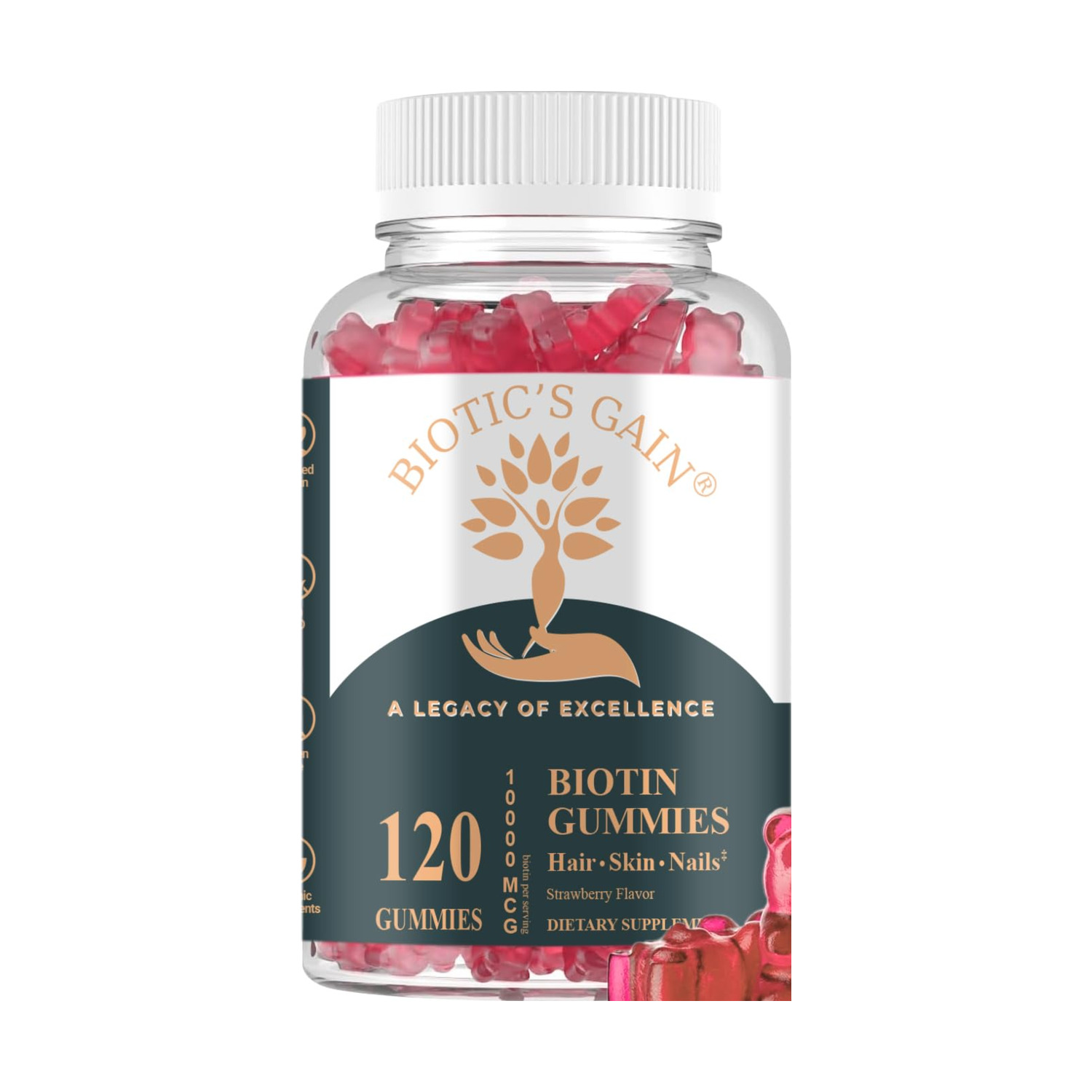
Biotic’s Gain High Strength Biotin Gummies supply 10,000mcg of biotin, in a bear-shaped gummy rather than a tablet, which suits people who would rather not swallow capsules. They comfortably clear the source-of threshold, so the authorised claims above apply.
Food supplements should not be used as a substitute for a varied and balanced diet and a healthy lifestyle. If you are pregnant, breastfeeding, taking medication or have a medical condition, speak to your doctor or pharmacist before starting any supplement.
Where to Buy
Biotic’s Gain Biotin Gummies are available on Amazon in the UK, USA and Australia. The button below takes you to the Biotic’s Gain store in your country.
Leave a Reply